

As the global urgency to tackle climate change intensifies, industries and governments are investing heavily in strategies to lower carbon emissions. Two approaches dominate the conversation: carbon capture and carbon reduction. While both aim to limit the impact of greenhouse gases, large-scale projects reveal that these strategies are complementary rather than interchangeable. Understanding the strengths, limitations, and real-world applications of each is crucial for shaping effective climate policy.
Understanding Carbon Reduction
Carbon reduction focuses on minimizing the generation of carbon dioxide at its source. This typically involves transitioning to renewable energy sources, improving energy efficiency, and adopting cleaner industrial processes. For example, replacing coal-fired power plants with wind, solar, or nuclear energy dramatically lowers carbon emissions. Similarly, optimizing manufacturing processes to consume less energy or emit fewer pollutants contributes directly to carbon reduction.
The advantage of carbon reduction is straightforward: it prevents emissions from entering the atmosphere in the first place. This approach is inherently preventive and often aligns with long-term sustainability goals. However, large-scale implementation can be challenging. Upgrading infrastructure, retraining workforces, and integrating new technologies require significant investment and planning. Moreover, some sectors, such as cement, steel, and heavy transport, face inherent limitations in reducing emissions entirely.
The Role of Carbon Capture
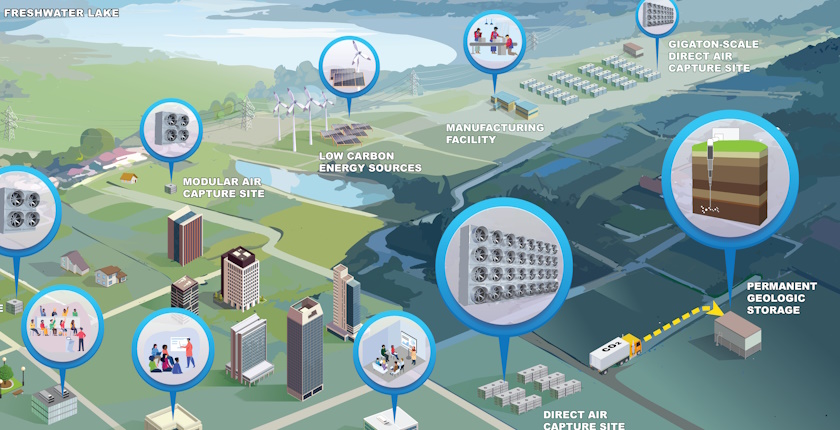
Carbon capture, on the other hand, addresses emissions after they have been produced. It involves extracting carbon dioxide from industrial flue gases or directly from the atmosphere and then storing it underground or utilizing it in commercial applications. Large-scale carbon capture projects have demonstrated the potential to mitigate emissions from sectors that are difficult to decarbonize.
A notable example is gas turbine carbon capture, where CO2 emissions from industrial turbines are captured and processed before they enter the atmosphere. Such projects highlight how carbon capture can act as a safety net, preventing unavoidable emissions from contributing to climate change. These systems can be integrated into existing plants, offering a pathway for industries to maintain operations while reducing their environmental footprint.
Lessons from Large-Scale Projects
Real-world carbon capture initiatives reveal several critical insights. First, scale matters. Capturing CO2 on a small pilot scale is relatively straightforward, but achieving meaningful reductions requires large, well-engineered systems. These projects demand substantial upfront investment and operational expertise, making government support and private-sector collaboration essential.
Second, carbon capture is not a substitute for carbon reduction. Projects that focus solely on capturing emissions without reducing their production risk creates a dependence on technological solutions rather than systemic change. Ideally, carbon capture complements efforts to reduce emissions by addressing residual outputs that cannot be eliminated.
Third, monitoring and maintenance are vital. Carbon storage requires careful management to ensure CO2 remains sequestered long-term. Failures in storage could undermine the environmental benefits of these projects. Lessons from existing facilities emphasize the importance of robust safety protocols, continuous monitoring, and transparency in reporting.
Complementary Strategies for a Sustainable Future
Ultimately, large-scale projects illustrate that a balanced approach combining carbon reduction and carbon capture offers the most promise. Reduction strategies tackle the root cause of emissions, while capture technologies address the residual carbon that is difficult to eliminate. Together, they form a comprehensive framework capable of achieving significant climate goals.
Policymakers and industry leaders are increasingly recognizing that relying solely on one approach is insufficient. Investments in renewables, efficiency improvements, and sustainable practices must go hand-in-hand with carbon capture systems, such as those deployed in industrial turbines. By integrating these strategies, nations can pursue aggressive emission reduction targets while maintaining industrial productivity and energy security.