
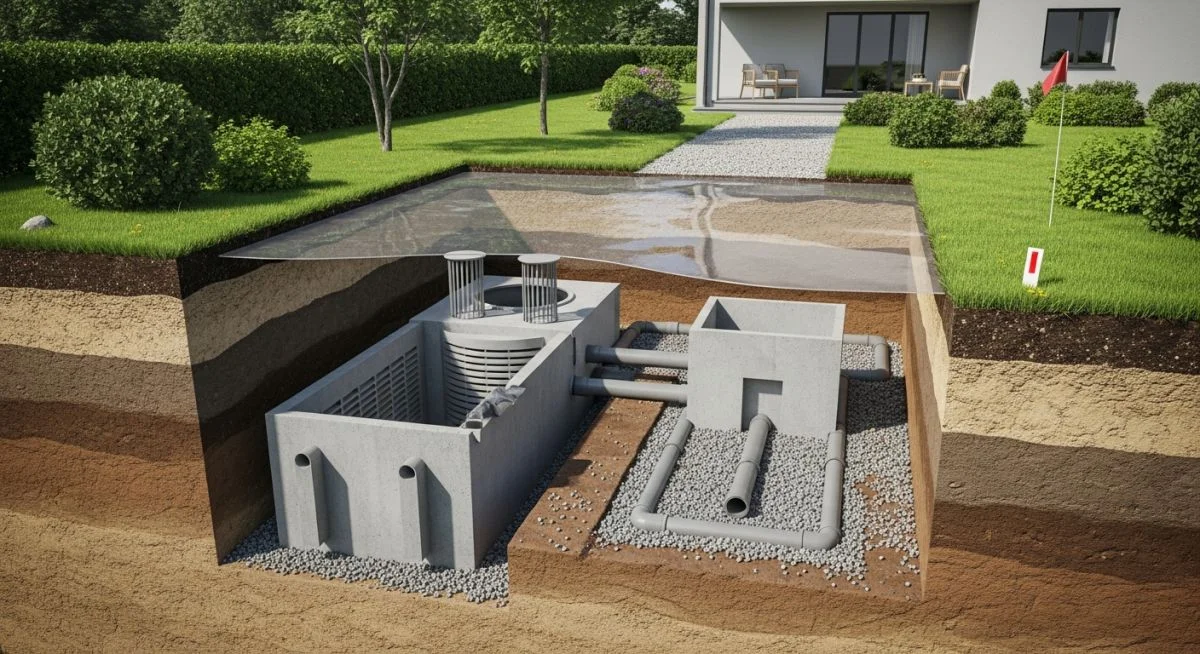

For properties that are not connected to the mains sewer network, a septic tank provides an effective way to manage household wastewater. Whether you’re replacing an ageing system, installing one for a new build, or simply looking to understand how septic tanks work, having the right knowledge can help you make informed decisions and keep your system operating efficiently.
A well-maintained septic tank can provide decades of reliable service, but choosing the correct size, ensuring proper installation, and carrying out regular maintenance are all essential for achieving the best performance.
What Is a Septic Tank?
A septic tank is an underground wastewater management system designed for properties that are not connected to a public sewer. Wastewater from toilets, sinks, showers, and household appliances flows into the tank, where solids settle at the bottom to form sludge while oils and grease float to the surface.
The remaining liquid, known as effluent, leaves the tank and flows into a drainage field, where it is naturally filtered through the soil. This process helps remove contaminants before the water re-enters the environment. Septic tanks are commonly used in rural locations, farms, and homes where access to mains drainage is unavailable.
How to Choose the Right Septic Tank
Selecting the right septic tank involves more than simply choosing a particular model. The size of the property, the number of occupants, ground conditions, and local regulations all influence which system will be most suitable.
Working with a Tricel supplier can help ensure you select a septic tank that matches your property’s requirements while meeting current regulations. Modern Tricel Vento septic tanks are designed with durability and ease of installation in mind, making them a popular choice for both domestic and light commercial applications.
Seeking professional advice before purchasing a system can help prevent costly mistakes and ensure the installation performs effectively for many years.
Septic Tank Installation
Correct installation is just as important as choosing the right tank. Factors such as ground conditions, drainage characteristics, access for maintenance, and the location of nearby watercourses all need careful consideration. In many cases, building regulations approval is required for a new septic tank installation, and planning permission may also be necessary depending on the project. Professional installers can assess your site, recommend the most appropriate solution, and ensure the installation complies with the relevant requirements.
A properly installed septic tank not only functions more efficiently but can also reduce the likelihood of future maintenance issues.
Maintaining Your Septic Tank
Routine maintenance is essential to keep your septic tank working efficiently and to extend its lifespan. Over time, sludge accumulates within the tank and must be removed through regular emptying.
Most domestic septic tanks require emptying approximately once a year, although this can vary depending on the size of the tank and the number of people using the property. Regular servicing also allows any potential problems, such as damaged components or developing blockages, to be identified before they become more expensive to repair.
Homeowners can also help protect their systems by avoiding the disposal of fats, oils, grease, wet wipes, sanitary products, and harsh chemicals down household drains.
Common Signs Your Septic Tank Needs Attention
Even well-maintained systems can develop issues over time. Recognizing the warning signs early can help prevent larger problems.
Some common indicators include:
- Slow-draining sinks, showers, or toilets.
- Unpleasant odors around the tank or drainage field.
- Pooling water above the drainage area.
- Toilets backing up or overflowing.
- Exceptionally lush grass around the drainage field compared to surrounding areas.
If any of these symptoms appear, arranging a professional inspection as soon as possible can minimize disruption and prevent further damage.