
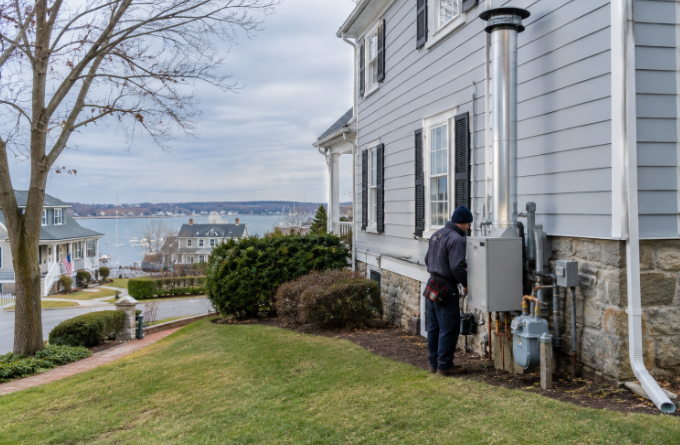

Replacing a boiler is a major home decision, especially in Annapolis, where older homes, waterfront properties, and changing Chesapeake Bay weather can create very different heating needs from one neighborhood to the next. A successful project starts by matching the equipment to the house, the heating system, and the household’s hot-water habits, rather than choosing the same size or model that was installed years ago.
Homeowners considering boiler installation in Annapolis Maryland should look beyond the appliance price. Correct sizing, venting, controls, installation quality, and commissioning all affect comfort, energy use, reliability, and the long-term value of the replacement.
Start With the Home, Not the Boiler Label
Square footage is only one piece of the sizing puzzle. A contractor should consider insulation levels, window condition, ceiling height, air leakage, duct or pipe losses, and the temperatures the home is expected to handle during winter. A finished basement, an enclosed porch, a remodeled attic, or new windows can all change the building’s heating load.
Do not assume the old boiler was correctly sized. Older systems were frequently selected with a generous safety margin, and improving insulation or air sealing may reduce the capacity your home now needs. A calculated heat loss gives the replacement decision a more dependable starting point.
Compare Boiler Types Before Choosing
Boiler design should suit both the home’s existing distribution system and the household’s daily routine. The following comparison can help narrow the options.
| Boiler Type | Best Fit | Important Consideration |
| Conventional | Homes with established radiator or baseboard systems | May have lower efficiency than condensing equipment |
| Condensing | Systems that can operate with lower return-water temperatures | Requires suitable venting and condensate drainage |
| Combi | Homes needing space heating and domestic hot water from one unit | Hot-water demand must be evaluated carefully |
| Electric | Homes without gas service or with specific electrical capacity | Operating cost depends on local electricity rates |
Gas and oil boilers also require practical planning. Fuel availability, gas-line capacity, oil storage, combustion air, equipment location, and vent routing should all be reviewed before a final recommendation is made.
Get Boiler Size Right
A heat-loss calculation estimates how much heat the home loses under local design conditions. It helps identify the boiler output needed to maintain indoor comfort. It should also account for the output of the radiators, baseboards, radiant loops, or fan coils that deliver heat into the rooms.
An oversized boiler can turn on and off in short cycles, which may increase wear and make temperatures less even. An undersized unit may run for extended periods and still fail to maintain the thermostat setting on the coldest days. Ask for the sizing method or load calculation in writing before approving a replacement.
Match the Boiler to the Heating System
Cast-iron radiators, fin-tube baseboards, radiant floors, and fan coils all transfer heat differently. That matters because the water temperature needed by the system affects boiler performance. Radiant floors often operate at lower water temperatures, whereas some older baseboard systems may require hotter water during peak winter conditions.
High-efficiency condensing boilers generally perform best when return water is cool enough for the unit to recover additional heat from combustion gases. Controls such as outdoor reset, properly sized circulator pumps, zone valves, expansion tanks, and balanced piping can help the system operate more consistently. A boiler replacement alone will not correct a cold room caused by inadequate insulation, air leaks, poor piping balance, or an undersized radiator.
Read Efficiency Ratings in Context
AFUE, or annual fuel utilization efficiency, estimates how efficiently a boiler converts fuel into heat over a typical year. A higher rating can be meaningful, but it does not guarantee the lowest bills if the unit is oversized, poorly vented, incorrectly controlled, or connected to a system that prevents efficient operation.
When comparing models, consider installation cost, expected maintenance, fuel use, warranty coverage, and likely service life. ENERGY STAR certified boilers meet AFUE thresholds of at least 90 percent for gas models and 87 percent for oil models, but the right choice still depends on how the equipment fits the home and heating distribution system.
Confirm Venting, Fuel, and Electrical Requirements
A boiler replacement is rarely a simple disconnect-and-reconnect project. Condensing models may require special vent materials, a condensate drain, and sometimes condensate treatment. Gas equipment may require verification that the existing line can carry the required load, while oil systems may need attention to tanks, supply lines, and filters.
Electrical connections, combustion air, safety controls, and vent termination locations also need professional review. The U.S. Department of Energy notes that high-efficiency boilers can distribute hot water through radiators, floor loops, or air-handler coils, which is why the boiler and distribution system should be sized together.
Compare Installation Quotes Line by Line
A clear estimate should identify the boiler make, model, fuel type, rated capacity, and warranty terms. It should also state whether the price includes new pumps, valves, filters, expansion tanks, venting changes, piping modifications, electrical work, removal of old equipment, permits, inspections, startup testing, and homeowner instruction.
Compare estimates with matching scope whenever possible. A lower initial price may leave out essential work such as permit handling, proper venting, water treatment, control upgrades, or system balancing.
Know When Repair May Be Better Than Replacement
A newer boiler with a minor repair need may be worth fixing. Replacement becomes more compelling when there are repeated breakdowns, corrosion, leaks, difficult-to-source parts, significant heat-exchanger problems, or major control failures. Consider the repair cost alongside the condition of the entire system, not just the failed part.
Plan for Commissioning and Ongoing Care
After installation, the contractor should properly fill and pressurize the system, remove trapped air, check combustion and safety controls, verify flow, test thermostats, and confirm that zones respond as intended. Keep a record of the model number, settings, warranty registration, and service history. Follow the manufacturer’s maintenance guidance and schedule professional service as appropriate for the equipment and fuel type.
Common Boiler Questions
Can a new boiler use existing radiators?
Often, yes. The installer should verify radiator capacity, piping condition, water temperatures, and system balance before confirming compatibility.
Is a condensing boiler worthwhile in an older Annapolis home?
It can be, particularly when the system can operate at lower return-water temperatures. A contractor should assess the radiators, controls, and piping rather than assuming age alone rules it in or out.
Does a larger home always need a larger boiler?
No. A well-insulated larger home can have a lower heating load than a smaller, drafty home with poor insulation and older windows.
Pre-Installation Checklist
- Record the current boiler’s age, model, fuel type, and repair history.
- List rooms that feel too cold, too warm, or slow to heat.
- Note how many people may use hot water at the same time.
- Identify renovations, insulation upgrades, window replacements, or added living space.
- Request at least two detailed written estimates.
- Confirm responsibility for permits, inspections, cleanup, startup, and warranty registration.
Conclusion
Choosing the right boiler for an Annapolis home begins with a careful look at the building and its heating system. A documented load calculation, compatible equipment, thoughtful controls, and a complete installation scope can provide steadier comfort and fewer avoidable service issues for years to come.