
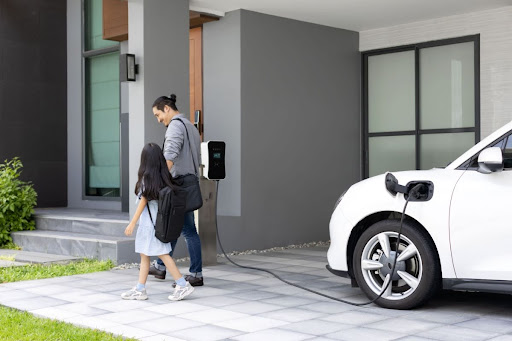

Key Takeaways:
- Home EV charging offers unparalleled convenience and cost savings.
- Integrating solar panels with EV chargers enhances energy efficiency.
- Smart home technologies optimize charging schedules and energy use.
- Bidirectional charging enables EVs to power homes during outages.
- Access to home charging significantly influences EV adoption rates.
Introduction
As the popularity of electric vehicles (EVs) continues to soar, the need for accessible and efficient home charging solutions is becoming essential for today’s drivers. Having the ability to recharge an EV from the comfort of home offers unmatched convenience, enabling owners to bypass public charging stations and charge their vehicles overnight. For those considering an EV home charger installation, this shift represents a game-changer in how families interact with transportation and energy usage in daily life.
Home EV charging balances sustainability and practicality by integrating easily into existing household routines. As technology and housing trends evolve, the intersection of energy management, renewables, and personal transportation is transforming the modern lifestyle. This guide will take a closer look at the critical benefits of home charging, how it blends with solar power, the rise of smart charging, and the widespread impact on EV adoption.
Benefits of Home EV Charging
EV owners who install a dedicated home charger quickly discover a range of advantages that set home charging apart from public options. First and foremost is the convenience of plugging in at day’s end and waking up to a fully charged car. There is no need to locate public chargers, wait in line, or budget extra time for top-ups. For busy families and professionals, this efficiency is invaluable.
Home electricity rates tend to be lower than those charged by public charging networks per kilowatt-hour. By charging overnight, especially if your utility provider offers time-of-use rates, costs can be further minimized. A Level 2 charger, which operates on a 240-volt outlet, typically replenishes an EV battery overnight, making each morning’s commute worry-free. This level of autonomy is a major incentive for urban and suburban drivers alike.
Integrating Solar Energy with EV Charging
Combining solar energy with a home charging solution takes sustainability to the next level. When solar panels generate electricity, homeowners can power their vehicles with clean, renewable energy and significantly reduce their carbon footprint. This approach not only reduces reliance on the grid but also maximizes the financial benefits of generating on-site electricity.
Charging your EV with solar-generated power is especially cost-effective during daytime hours, aligning vehicle charging with peak solar production. As battery storage systems become more widely available, some homeowners can store excess solar energy during the day and direct it to EVs at night. According to a detailed analysis by the U.S. Department of Energy, integrating solar with home charging also shields users from fluctuating grid energy prices and enhances energy independence.
Smart Home Integration for EV Charging
The rise of the smart home is rapidly elevating the EV charging experience. Intelligent chargers can be set to activate during off-peak electrical periods, lowering operational costs and easing demand on the local power grid. Many models are now compatible with home energy management systems, so charging can be monitored or even scheduled remotely via smartphone apps.
Integration with smart home systems brings added flexibility and transparency to energy consumption. Homeowners can monitor charger status, receive maintenance alerts, or even coordinate charging with solar panel output for optimal energy use. Smart tech also future-proofs the home, making it easier to upgrade or expand energy systems as needs evolve.
Bidirectional Charging and Energy Resilience
Bidirectional charging, often known as vehicle-to-home (V2H) capability, is an emerging solution for families seeking energy resilience. In this setup, certain EVs are equipped to push power back into the home’s electrical system. During a power outage or periods of high grid demand, an EV can provide a reliable backup, powering essential appliances and systems until conventional service is restored.
This versatility not only offers peace of mind but can also save money by allowing homeowners to use stored vehicle energy when utility prices spike. While not all vehicles or chargers yet support V2H technology, the number of options available is increasing rapidly, making this a promising area for future home energy management.
Impact of Home Charging on EV Adoption
The availability of home charging stations is one of the most significant influences on the decision to purchase an electric vehicle. Research consistently shows that people with access to in-home charging infrastructure are far more likely to own or consider an EV than those who depend solely on public stations. In fact, a study by the International Energy Agency found that access to home charging boosts purchase likelihood by more than 2.
Expanding home and workplace charging is vital to accelerate EV adoption in North America and beyond. Local incentives and rebates for charger installation are increasingly common, further smoothing the path for new adopters and helping communities reduce transportation-related emissions.
Considerations for Multifamily Residences
Bringing EV charging to apartment complexes and other multifamily properties is a growing priority as more people move to urban areas. These environments face unique hurdles, such as shared parking and limited electrical infrastructure, but solutions are emerging. Shared chargers, managed access systems, and partnerships between property managers and utility companies are making on-site charging feasible for more tenants.
For property owners, installing chargers can be a valuable amenity that attracts environmentally conscious residents. Municipal programs, grants, and utility-supported incentives can also help offset installation costs, speeding the transition toward greener, more flexible housing communities.
Final Thoughts
The shift to home EV charging is transforming personal mobility, delivering convenience, savings, and new opportunities for sustainable living. By embracing smart technologies and tapping into renewable resources, homeowners are making their energy routines more efficient and resilient. As access to home charging grows—and as technology evolves—it will play a pivotal role in accelerating mass EV adoption, driving progress toward a cleaner energy future, and shaping the next generation of modern living spaces.