


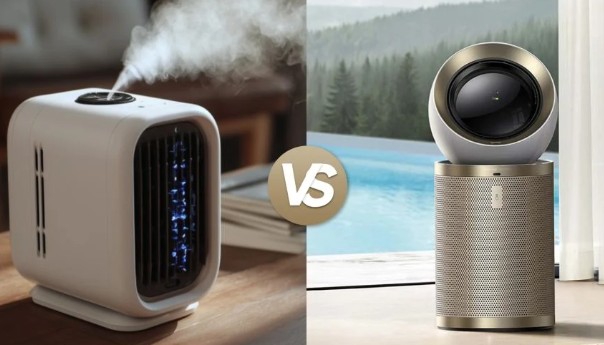
People often use air filtration and air purification interchangeably, but they aren’t necessarily the same. Both aim to improve indoor air quality, although the technologies involved and the pollutants they address can differ considerably.
Understanding these differences helps homeowners dealing with dust, seasonal allergies, pet dander, or unpleasant household odors. While some products combine several technologies, knowing what each method actually does can help you make a more informed decision.
What Is Air Filtration?
Air filtration involves passing air through a physical filter designed to capture airborne particles. As air moves through the material, it traps contaminants while cleaner air passes through.
Common household HVAC filters primarily capture particles such as dust, pollen, and pet dander. More efficient filters can capture smaller particles, depending on their design and rating.
The Minimum Efficiency Reporting Value (MERV) system commonly measures filter performance. Higher MERV ratings generally indicate better performance at capturing smaller particles, but not every HVAC system can accommodate high-efficiency filters.
Filtration is particularly useful for reducing airborne particles, but conventional particle filters aren’t designed to remove gaseous pollutants or household odors.
What Is Air Purification?
Air purification is a broader term covering technologies designed to remove or reduce airborne contaminants. Some purification devices use physical filters, while others incorporate additional methods.
For instance, activated carbon can help capture certain odors and gaseous pollutants. Some systems use ultraviolet germicidal irradiation to inactivate microorganisms under suitable operating conditions.
Other technologies, including ionization, are marketed for air purification, although their effectiveness and potential byproducts vary.
This means air purification isn’t automatically more effective than filtration. Performance depends on the technology, the contaminants being targeted, and how the equipment is used.
How Do They Compare in Everyday Homes?
The biggest difference depends on the air quality problem you’re trying to address.
If dust, pollen, and pet dander are your main concerns, a particle-filtration system may be enough. For example, a HEPA-equipped portable air cleaner can capture a high proportion of particles passing through its filter.
If you’re concerned about certain odors or gaseous contaminants, activated carbon filtration may help.
Homeowners researching heating and cooling Tucson AZ services may also want to consider how indoor air quality equipment integrates with their existing HVAC system. A professional can help determine whether a filter or purification system matches the property’s airflow requirements.
Can You Use Both Technologies Together?
Yes, and many modern air-cleaning products already combine different methods.
A portable air cleaner might include a HEPA filter for particles alongside activated carbon for certain odors. Whole-home systems may also incorporate additional air-cleaning technologies.
However, equipment selection matters. Restrictive filters can reduce HVAC airflow if the system isn’t designed to handle them, and some electronic air cleaners may generate ozone.
It’s worth checking independent performance information rather than relying entirely on marketing claims.
Which Option Is Better?
Neither approach is universally better because filtration and purification aren’t mutually exclusive. The right choice depends on the pollutants present, the size of the space, and the equipment already installed.
For most households, effective particle filtration, adequate ventilation, and controlling pollution sources are sensible starting points. Additional purification technologies may be useful when they address a specific problem.
Understanding what each system can realistically achieve makes it easier to invest in cleaner indoor air without paying for features your home doesn’t need.