


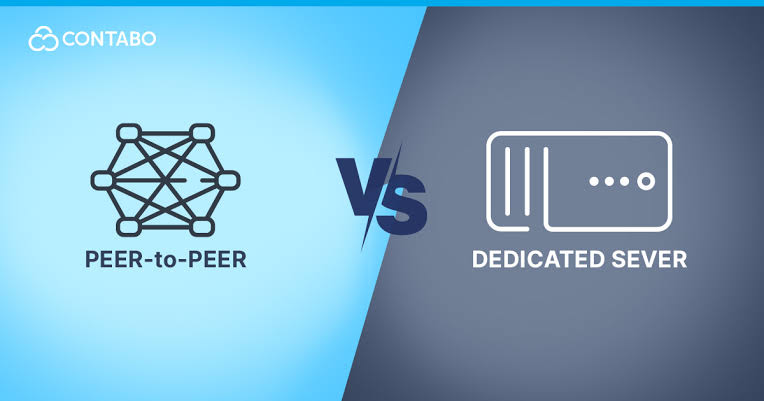
Every online match depends on a network architecture that connects players and keeps the game in sync. Some slot gacor use powerful dedicated servers, while others connect players directly in peer-to-peer sessions. This choice affects lag, fairness, security, and even how long a game can stay online. Understanding dedicated servers vs peer-to-peer networking helps players make sense of their online experience. This article explains how both approaches work and why developers choose one over the other.
The Challenge of Online Multiplayer
In an online game, every player’s device must agree on what is happening: where each character stands, who fired first, and who scored. Data travels across the internet with small delays, so devices never see exactly the same moment at exactly the same time. Networking systems exist to keep everyone synchronized as closely as possible, resolve conflicts, and make the game feel responsive.
What Is a Dedicated Server?
A dedicated server is a computer, usually located in a data center, that runs the game simulation and acts as the central authority. Players connect to this server rather than to each other. The server receives player inputs, calculates results, and sends updates back to every player.
Advantages of Dedicated Servers
- Fairness: No player hosts the game, so no one gains a built-in latency advantage.
- Stability: Matches continue even if a player disconnects.
- Security: The server acts as the authority, making many cheats harder to perform.
- Performance: Servers in data centers have fast, reliable connections.
- Large player counts: Games with many players, such as battle royales and MMOs, typically require dedicated servers.
Disadvantages of Dedicated Servers
- Cost: Developers must pay for server hosting, which can be expensive.
- Server shutdowns: If a company stops funding servers, online play may end.
- Regional coverage: Players far from server locations may experience higher ping.
What Is Peer-to-Peer Networking?
In peer-to-peer (P2P) networking, players connect directly to one another rather than to a central server. There are two common forms:
- Host-based P2P: One player’s device acts as the host, running the game and managing connections for others.
- Full mesh P2P: Every player connects directly to every other player, sharing data among themselves.
Advantages of Peer-to-Peer
- Lower cost: Developers do not need to pay for expensive server infrastructure.
- Good for small groups: Works well for cooperative games and small matches.
- Potentially low latency: Players close to each other may enjoy very direct connections.
- Longevity: Games may remain playable even if official servers are reduced.
Disadvantages of Peer-to-Peer
- Host advantage: In host-based systems, the host experiences near-zero latency while others experience delays.
- Host migration issues: If the host leaves, the game may pause, migrate, or end.
- Connection quality varies: A player with a weak connection can affect everyone.
- Security concerns: Direct connections can expose IP addresses and make cheating easier.
- NAT problems: Router settings can prevent players from connecting to each other.
Hybrid Approaches
Many modern games combine approaches. Some use dedicated servers for matchmaking and account data while running matches via peer-to-peer. Others use relay servers that pass P2P traffic through a middle point to hide IP addresses and improve connectivity. Fighting games often use P2P with advanced rollback netcode to keep matches responsive.
Netcode Techniques That Make Games Feel Smooth
Regardless of architecture, developers use clever techniques to hide latency:
- Client-side prediction: Your device predicts the result of your actions immediately instead of waiting for server confirmation.
- Interpolation: Smoothly blends between updates so other players move naturally.
- Lag compensation: The server rewinds time slightly to check whether your shot hit based on what you saw.
- Rollback netcode: Predicts inputs and corrects them quickly if predictions were wrong, common in fighting games.
- Tick rate: How often the server updates the game state each second. Higher tick rates can improve accuracy.
How Architecture Affects Your Experience
If you notice that you died after reaching cover, lag compensation may be favoring an opponent’s view. If a match ends when one player quits, it may use host-based P2P. If your ping depends on your region selection, the game likely uses regional dedicated servers. Understanding these patterns helps you troubleshoot and set realistic expectations.
Tips for Better Connections
- Use wired Ethernet for stability.
- Select the nearest server region when possible.
- For P2P games, check your router’s NAT type and enable UPnP if recommended.
- Avoid hosting matches on unstable connections.
- Close bandwidth-heavy applications during play.
Frequently Asked Questions
Which is better, dedicated servers or peer-to-peer?
Dedicated servers are usually better for competitive and large-scale games, while P2P can work well for small cooperative sessions.
What is NAT type?
It describes how your router handles connections. Strict NAT can make P2P connections difficult.
What does tick rate mean?
It is how many times per second a server updates the slot . Higher tick rates can improve responsiveness.
Conclusion
The debate of dedicated servers vs peer-to-peer comes down to trade-offs between cost, fairness, stability, and scale. Dedicated servers offer stronger fairness and security, while peer-to-peer reduces costs and suits smaller groups. Knowing how your games connect helps you understand lag, troubleshoot problems, and appreciate the technology that makes online play possible.