


Hair loss can develop gradually, appear after illness, or affect one area of the scalp. The right response depends on the cause, the condition of the follicles, and your long-term goals. Available care ranges from medication and light-based therapy to injections and surgery. A medical evaluation helps identify which approach offers a realistic balance of results, maintenance, recovery, and risk.
Start With an Accurate Hair Loss Diagnosis
Before choosing a treatment, a specialist must identify the type of hair loss involved. Pattern loss, stress-related shedding, autoimmune disorders, hormonal changes, nutritional deficiencies, and scarring conditions do not respond to the same care. Blood tests, a scalp examination, medical history, a pull test, or a biopsy may be needed when the cause remains unclear.
Seek an evaluation when you notice:
- Sudden shedding, scalp pain, redness, or scaling
- A widening part, receding hairline, or expanding bald spot
- Ongoing loss after illness, childbirth, surgery, or weight change
- Patchy loss that develops without a clear cause
What Hair Restoration Options Exist?
The main hair loss treatments fall into four groups: medication, regenerative procedures, light-based care, and surgery. Some people need one method. Others benefit from combining hair loss treatments to preserve existing follicles while restoring areas that no longer produce enough coverage.
The best choice depends on whether follicles remain active. Nonsurgical care may help when miniaturized hairs are still present. Surgery becomes more relevant when an area has permanent loss, and the donor region contains stable hair.
A specialist may discuss these choices with men and women:
- Topical or oral medication for progressive pattern loss
- Low-level laser devices that stimulate active follicles
- Platelet-rich plasma injections using concentrated platelets
- Surgical grafting for areas with permanent loss
At Kopelman Hair Restoration NYC, the treatment plan should match the diagnosis rather than rely on a standard package. This approach helps avoid spending time on care that cannot address the underlying cause.
Medications for Progressive Hair Loss
Minoxidil (Rogaine) is an over-the-counter topical medication used to treat pattern hair loss. It may extend the growth phase and support hair regrowth in active follicles. Results usually require consistent use for several months. Benefits tend to fade after treatment stops. Finasteride (Propecia) is a prescription medicine commonly used for male pattern baldness. It may slow further loss and improve density in some patients.
Female pattern hair loss may respond to topical medication, but the plan must reflect age, pregnancy potential, health history, and the pattern of shedding. Medication works best for preserving or thickening active follicles. It cannot create new follicles in smooth areas that have been bare for years.
A clinician may recommend a different treatment for balding hair when medication alone cannot provide enough coverage.
PRP and Low-Level Laser Therapy
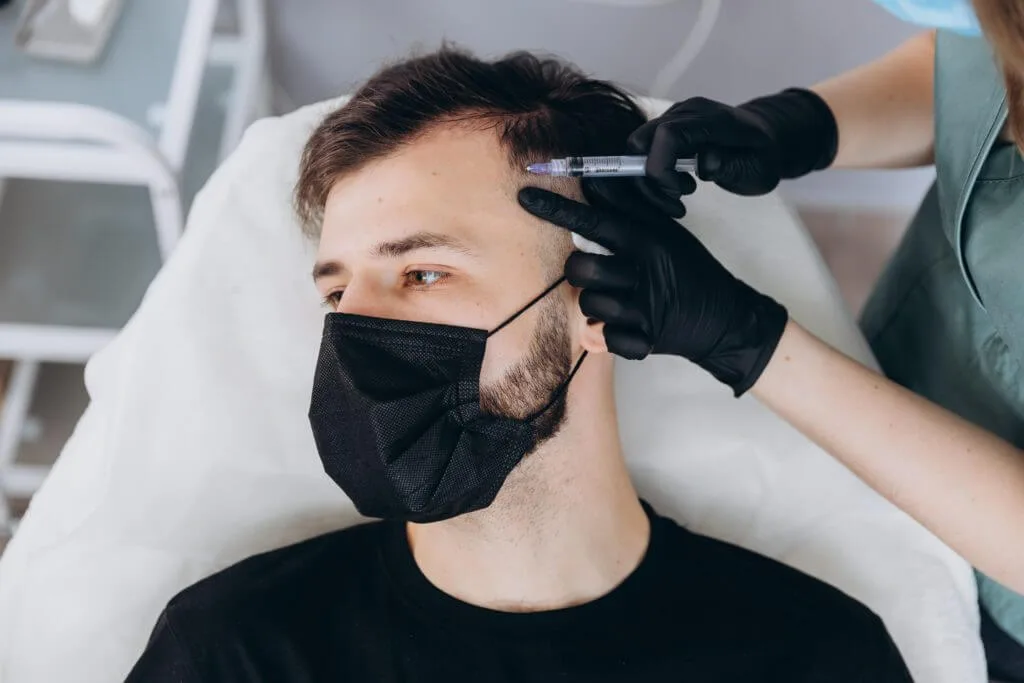
Platelet-rich plasma (PRP) uses a sample of your blood. The platelets are separated and injected into selected scalp areas. PRP therapy aims to support weakened follicles and improve thickness. Sessions are usually repeated, and maintenance may be needed.
Low-level laser therapy exposes the scalp to controlled red light. It may promote hair activity without incisions or injections. Home devices and in-office systems differ in strength, quality, and treatment schedules. Patients should check whether a device has appropriate regulatory clearance and understand that regular sessions may be necessary.
These methods are more likely to support thinning hair than rebuild a fully bare area. They may also be paired with medication or surgery when a broader plan is appropriate. Results vary because both methods depend on remaining follicle activity.
FUE and FUT Hair Transplant Surgery
Hair transplantation moves resistant follicles from a donor area, usually the back or sides of the scalp, into areas with permanent loss. The transplanted follicles keep the growth characteristics of the donor region, but the procedure does not stop untreated native hair from continuing to thin.
Follicular unit extraction (FUE) removes grafts individually through small circular openings. It avoids a long linear donor scar and often supports shorter hairstyles. The donor area still develops many small scars, and removing too many grafts can reduce visible density.
Follicular unit transplantation (FUT) removes a narrow strip of donor scalp. The strip is divided into follicular units before placement. This method can provide many grafts while preserving more donor area for future sessions, but it leaves a linear scar.
| Option | Main Consideration |
| FUE | Small scattered scars and shorter early recovery |
| FUT | Linear scar and strong graft yield |
| Medication | Ongoing use is usually required |
| PRP or laser | Best suited to active, weakened follicles |
Neither surgical method is automatically better. The choice depends on hairstyle, donor density, scalp flexibility, graft needs, previous procedures, and the possibility of future loss.
Results, Recovery, and Limitations
Nonsurgical methods often require three to six months before visible change. Regrowing hair takes time because follicles move through growth cycles. Early improvement may appear as reduced shedding before density changes become clear.
After surgery, redness, swelling, crusting, temporary numbness, and short-term shedding can occur. Transplanted hairs commonly shed before new growth begins. Visible progress develops over several months, while maturation may continue for a year or longer.
Possible risks include infection, bleeding, scarring, poor growth, unnatural placement, and uneven density. Careful planning must account for future hair thinning so the restored area continues to look balanced.
No procedure can guarantee a specific density. Donor supply is limited, and advanced loss may require more than one session. The goal should be natural coverage that remains credible as surrounding hair changes.
How to Choose the Right Treatment
The strongest plan starts with diagnosis and realistic goals. Ask what each option can change, how long it takes, what maintenance it requires, and what happens if you stop. Also ask whether the proposed method protects existing hair or only replaces lost coverage.
Review the clinician’s training, treatment approach, donor management, and before-and-after results for patients with a similar pattern. A qualified specialist should explain limitations as clearly as benefits.
Effectively treating hair loss means preserving future choices, not only improving the scalp’s appearance today. The right plan may combine medical care with surgery, or it may delay surgery until the pattern becomes more stable.