


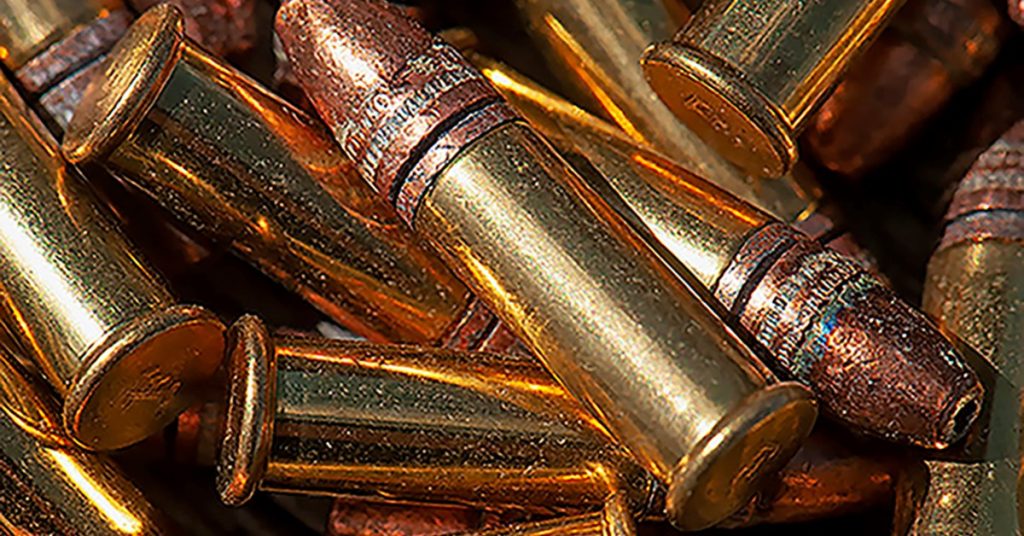
Approximately 60,000 tons of lead are deposited at shooting ranges worldwide every year. Unfortunately, this lead builds up in soil and water, contaminating land and harming wildlife.
Shooters and range employees also face exposure to lead fumes and particles every time a firearm is discharged. That’s why the technician team at Sim-X Ammo advocates for a lead-free alternative to frangible ammunition.
What is lead-free ammunition, and how does it differ from frangible rounds?
Lead-free ammunition is ammo made without any lead components in the bullet or primer. Manufacturers use materials such as copper and its alloys, tungsten and bismuth. These metals deliver solid ballistic performance without the toxic downsides of lead.
In the broader category of lead-free ammunition, there are frangible alternative rounds. These are designed to break apart into tiny particles or dust upon striking a hard surface. They are made by compressing powdered metals, such as copper, using a binding agent.
Their purpose is to prevent ricochet or back-splatter on steel targets, so they are often used for indoor ranges or close-quarters training.
Why is lead in ammunition a health risk for shooters and range staff?
Every time a lead-core bullet is fired, microscopic lead particles and lead contamination spread into the air. These particles can settle on shooters’ hands, clothing and range surfaces, adding up over time.
Lead exposure threatens long-term health, especially for frequent shooters, instructors and range employees. Lead poisoning can affect the nervous system, kidney function and even cognitive health. With non-toxic ammo, shooters can breathe cleaner air, handle cleaner gear and control the contamination risk.
How does lead-free ammo benefit wildlife and the environment?
When hunters use traditional lead bullets, fragments often remain in animal carcasses left in the field. Scavengers like eagles, vultures and coyotes ingest that lead, sometimes fatally. This has been a real problem for wildlife conservation efforts.
Spent lead bullets and shots also leach into the soil and waterways, contaminating ecosystems around hunting grounds and shooting ranges. Lead-free ammunition drastically reduces this environmental impact, protecting wildlife and natural resources.
Does lead-free ammunition perform as well as traditional lead-cored rounds?
High-quality lead-free ammunition often matches, and in some cases exceeds, the ballistic performance of traditional rounds. Copper bullets hold together on impact, delivering deep penetration and consistent expansion—crucial for ethical hunting. When well-designed and properly stabilized, they’re very accurate.
However, equal-weight copper bullets are longer than lead and require the right barrel twist to stabilize. Therefore, test your gun’s load and follow the manufacturer’s twist-rate guidance. Expect a slightly higher cost and possible copper fouling or feeding differences compared to lead.
What are regulatory and range compliance considerations for switching to lead-free ammo?
Several U.S. states, including California, have banned lead ammunition for hunting in certain zones to protect endangered species. Others have implemented pilot programs or incentives to encourage the change. The U.S. Fish and Wildlife Service (USFWS) has long banned lead ammunition for hunting migratory waterfowl.
Most public and private ranges are also adopting “non-lead only” policies to reduce cleanup costs and contamination risks. Even where not legally required, many organizations are switching voluntarily, citing health, liability and environmental reasons.
How should individuals and organizations evaluate whether to adopt lead-free ammunition?
Adopting lead-free ammunition requires a thorough evaluation of:
- Health and safety: Using lead-free ammo enhances shooter safety and protects range employees from health risks associated with lead exposure.
- Environmental goals: Using non-toxic ammo aligns with sustainability and wildlife conservation objectives.
- Cost and availability: Although lead-free ammo prices are higher now, they will drop as production scales up.
- Performance tests: Try different brands to confirm reliability and accuracy in your firearms.
What adoption strategies help ranges and clubs transition smoothly?
To transition smoothly to lead-free ammunition, the technical team at Sim-X Ammo advises ranges and clubs to:
- Create a clear, multi-phase plan to phase out lead-based ammo.
- Start with a pilot program to test performance and firearm compatibility, and to gather user feedback.
- Educate staff and members on handling, maintenance and benefits of non-toxic ammo.
- Collaborate with manufacturers like Sim-X Ammo to ensure a reliable supply, bulk pricing and technical support.
- Offer incentives to early adopters.
- Evaluate pilot results to identify improvements and finalize procedures for full implementation.
- Implement the full transition gradually while monitoring range compliance and overall effectiveness.
Conclusion
The lead ammunition era is almost over, and the shift to lead-free ammunition has already begun. These non-toxic ammo have proved good for shooters, wildlife and the overall environment.