
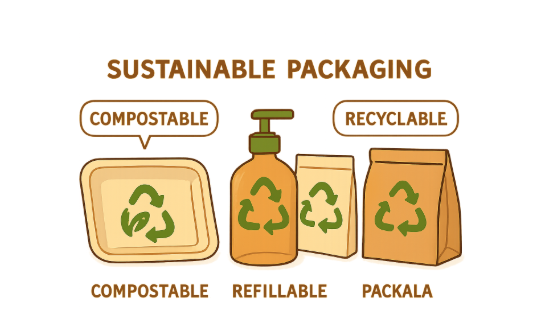

In today’s environmentally conscious market, brands are increasingly seeking sustainable packaging solutions that align with their values and meet consumer expectations. This article examines innovative approaches to eco-friendly packaging, highlighting successful implementations and providing practical strategies for businesses seeking to minimize their environmental impact. With over 25 years of industry experience serving businesses in Fort Collins and the surrounding areas, NXT Level Packaging is recognized as an authority in sustainable packaging solutions, providing expert insights, customized materials, and efficient packaging systems that help brands reduce waste and operate more sustainably.
Innovative Materials Transforming Packaging
Advancements in material science have led to the development of sustainable alternatives to conventional packaging. For instance, Cruz Foam, a U.S.-based company, produces compostable foam packaging from upcycled food waste, including chitin from shrimp shells. Their products, including protective foam inserts and insulated shipping containers, decompose in approximately 100 days under composting conditions, providing a high-performance, eco-friendly solution for brands seeking to reduce plastic waste.
Refillable and Reusable Packaging Systems
Implementing refillable and reusable packaging systems is a practical strategy for reducing waste. Activist Skincare, for example, offers refillable skincare products packaged in Mylar, resulting in a 99% reduction in shipping emissions and an 80% reduction in plastic use. Customers can refill their original glass containers with pouches ordered directly from the brand’s website. The company also provides prepaid shipping labels for recycling empty pouches, further minimizing its environmental impact.
Collaborating with Specialized Packaging Providers
Partnering with experienced packaging providers can streamline the transition to sustainable solutions. Providers with decades of industry experience often offer a wide range of eco-friendly packaging options tailored to different industries and operational needs. Their expertise in sustainable materials, design, and efficiency enables businesses to reduce their environmental impact while maintaining product protection and visual appeal. By working with knowledgeable specialists, companies can more easily navigate the complexities of adopting sustainable packaging practices.
Designing for Recyclability and Compostability
Designing packaging with recyclability and compostability in mind is crucial for sustainability. Brands are increasingly using eco-friendly materials such as bamboo fiber, sugarcane bagasse, recycled paperboard, and bioplastics (PLA). These biodegradable packaging options reduce reliance on finite resources and return to nature or recycling systems after use.
Leveraging Smart Packaging for Consumer Engagement
Integrating technology into packaging enhances consumer interaction and provides product information. For example, Carlsberg Group unveiled its “Fibre Bottle,” made from sustainably sourced wood fibers and an inner plant-based lining. This innovative design is fully recyclable and maintains beer quality, showcasing Carlsberg’s commitment to sustainability and innovation. The bottle’s natural texture and modern aesthetics appeal to eco-conscious consumers.
Overcoming Challenges in Sustainable Packaging Adoption
Despite the benefits, some brands hesitate to adopt sustainable packaging due to concerns about the associated costs. British packaging firm Mondi reported that many of its customers are reluctant to switch to sustainable packaging because of these considerations. However, the company remains committed to sustainability, with 82% of its 2022 revenue derived from products that are reusable, recyclable, or compostable.
Final Thoughts
Embracing sustainable packaging solutions is not only beneficial for the environment but also enhances brand reputation and meets consumer demand for eco-friendly products. By exploring innovative materials, implementing refillable systems, collaborating with specialized providers like NXT Level Packaging, and designing for recyclability, brands can effectively reduce their environmental impact and contribute to a more sustainable future.