


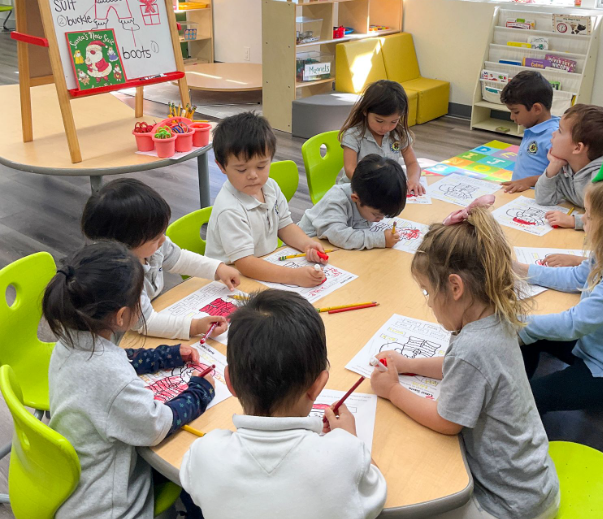
In the modern educational landscape, trilingualism is becoming a prominent trend as families seek to provide their children with a competitive edge in a globalized society. At leading institutions such as Pacific Academy Costa Mesa, trilingualism is integrated into a structured academic model that supports both language acquisition and cognitive development from an early age. Early exposure to multiple languages not only supports communication but also promotes stronger cognitive development and improved academic outcomes.
1. Understanding Early Trilingualism in Modern Education
The concept of trilingualism refers to the ability to use three languages fluently in daily life. For young children, this acquisition is most effective when it happens naturally through an immersive learning environment.
1.1. What Is Trilingualism in a School Setting?
In an educational context, this involves students receiving instruction in three different languages simultaneously. Children do not just learn languages as isolated subjects; they acquire them by studying academic concepts and participating in hands-on activities. This communicative approach ensures that students use the languages in real-life contexts, which enhances both fluency and comprehension.
1.2. Why Early Language Exposure Matters
The human brain develops most rapidly during the early years of life. During this period, the brain is highly flexible and can absorb new linguistic patterns much faster than in later years. Providing early exposure creates a stable foundation for long-term learning and cognitive growth. It allows children to become comfortable with diverse sounds and structures, making them more confident communicators as they mature.
2. Academic Advantages of Trilingualism in Early Education
Research indicates that students who master multiple languages from an early age enjoy significant academic and cognitive benefits. These advantages of trilingualism become even more evident when language learning is integrated into daily academic instruction rather than taught in isolation.
2.1. Enhanced Cognitive Development and Focus
Learning three languages increases a child’s ability to process and memorize information. It strengthens memory, improves attention control, and enhances the ability to process information more efficiently. Furthermore, the mental effort required to manage multiple languages improves a student’s ability to focus and ignore distractions in the classroom.
2.2. Stronger Problem-Solving Skills
Trilingual children develop stronger analytical thinking and decision-making skills when approaching complex problems. They can evaluate situations from multiple perspectives and choose effective solutions with greater confidence. This ability is a direct outcome of consistent exposure to trilingual learning environments.
2.3. Improved Academic Performance in Core Subjects
Linguistic mastery often translates to better performance in other academic areas, including reading comprehension and mathematics. The analytical skills gained through structured programs, such as Mandarin or Spanish immersion, help students grasp abstract concepts more effectively. These approaches reinforce the benefits of trilingualism by connecting language learning with real academic content.
2.4. Global Communication and Cultural Awareness
Beyond grades, trilingualism fosters empathy and respect for diversity. Students develop a broader perspective of the world, which prepares them to be compassionate and responsible global citizens. This cultural intelligence is essential for thriving in international academic and professional environments. Overall, trilingualism plays a critical role in shaping academically capable, cognitively flexible, and globally aware students.
3. Pacific Academy Costa Mesa and Multilingual Learning
For families in Southern California, Pacific Academy Costa Mesa offers a premier environment for multilingual development. The school is ranked No. 2 among the Best K-12 Private Schools in Orange County, reflecting its commitment to academic excellence and innovation.
3.1. School Overview and Nurturing Environment


3.2. Language Immersion Opportunities
The academy integrates a successful Mandarin immersion program directly into its academic curriculum. Furthermore, students benefit from daily Spanish immersion through enrichment classes that expand their global awareness. These languages are woven into daily lessons through songs, storytelling, and cultural celebrations, making the learning experience both memorable and engaging. Unlike traditional language programs, Pacific Academy Costa Mesa integrates trilingualism into daily academic instruction rather than treating it as a separate subject. This approach ensures consistent exposure and practical usage, which significantly accelerates language acquisition and long-term retention.
4. Conclusion
Early trilingualism provides a clear academic advantage by improving cognitive function, problem-solving skills, and overall achievement. Programs like the Mandarin immersion program and Spanish enrichment at Pacific Academy Costa Mesa ensure that students grow into confident, well-rounded learners as one of the top-ranked private schools in Orange County, Pacific Academy Costa Mesa continues to set a strong standard for trilingual education and whole-child development.
For families interested in exploring the benefits of trilingualism in a structured academic setting, Pacific Academy Costa Mesa offers a supportive environment where students can thrive both academically and linguistically. Families are encouraged to connect with the admissions team to learn more about the curriculum, schedule a campus tour, and explore enrollment opportunities tailored to their child’s development. For further inquiries, families may contact the school at 833-796-5688 or via email at CostaMesa@PacificAcademy.org.