
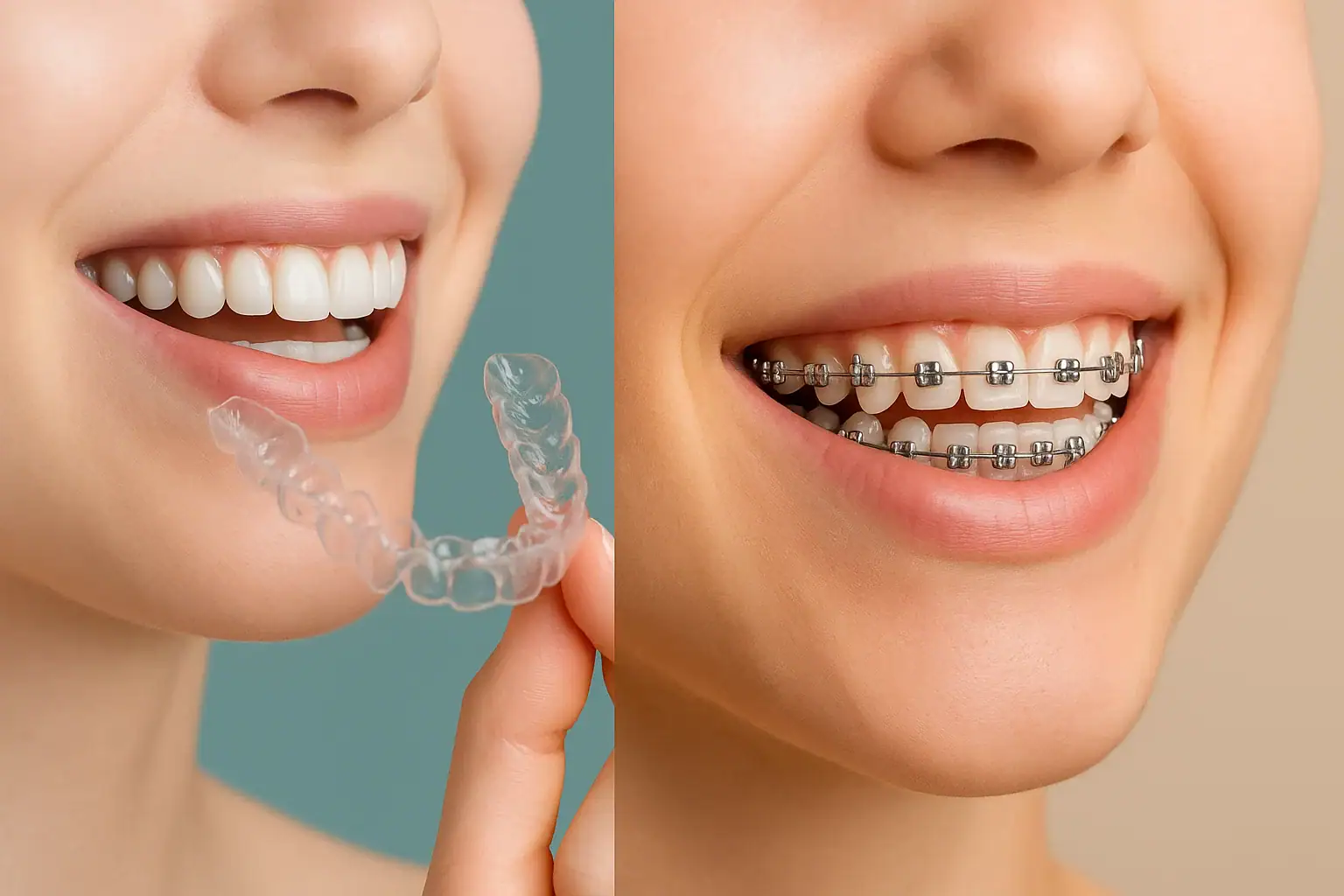

A straight smile does more than change how you look. It changes how you eat, speak, and face each day. Yet many people feel confused or uneasy when they start to think about orthodontic treatment. You might wonder which option is right. You might feel nervous about cost, comfort, or how you will look at work or school. This guide gives you clear facts from orthodontic specialists so you can choose with less fear and more control. You will learn how traditional braces work, how clear aligners compare, and when other methods make more sense. You will also see what to expect during treatment and how to prepare. If you already searched for braces in Burlington or asked your dentist for advice, this is your next step. You deserve straight answers before you commit.
1. Metal braces
Metal braces are the most common choice for children and teens. Many adults use them too. They use small brackets on each tooth with a wire that guides teeth into better positions.
Here is what you can expect.
- Strong. Metal brackets can handle tough bites and large shifts.
- Steady progress. Your specialist adjusts the wire at regular visits.
- Visible. The brackets and wire show when you smile or talk.
You need to brush with care. Food can stick around the brackets. The Centers for Disease Control and Prevention explains that trapped food raises the risk of tooth decay. Careful brushing, flossing, and fewer sugary drinks protect your teeth during treatment.
Metal braces help with crowding, gaps, overbite, underbite, and crossbite. You wear them most of the day and night. You cannot remove them at home. That steady use leads to strong results for even severe problems.
2. Ceramic braces
Ceramic braces work like metal braces. The main difference is how they look. The brackets use tooth colored material.
Here are key points.
- Less visible in photos and at work.
- Similar treatment time to metal in many cases.
- More fragile than metal. Brackets can chip.
Ceramic braces still need regular visits and strong brushing. Some people choose them for the top teeth only. Others use them on both rows.
You still avoid very hard or sticky foods. Chewing ice or hard candy can break brackets and slow your progress. That means more visits and more cost.
3. Clear aligners
Clear aligners are thin plastic trays shaped to fit your teeth. You receive a series of trays. Each set moves your teeth a small step.
They offer three main benefits.
- Removable. You take them out to eat and to brush.
- Clear. People often do not notice them in normal talk.
- Comfort. The smooth surface feels gentle against the cheeks.
You must still wear them most of the day and night. Many plans call for 20 to 22 hours of daily wear. If you forget or leave them out, your teeth will not move as planned.
Clear aligners work best for mild to moderate crowding or spacing. Complex bites may still need braces. The American Dental Association notes that both braces and aligners can straighten teeth when used under care from a trained dentist or orthodontist.
4. Lingual braces
Lingual braces sit on the back side of your teeth. People in front of you cannot see them.
They share some traits with metal braces.
- They stay on your teeth all day and night.
- They work on many bite problems.
- They need steady visits for wire changes.
They also have special concerns. Cleaning can feel tricky at first. Your tongue may need time to adjust. Speech may sound different for a short time. Many people adapt over a few weeks.
Lingual braces are less common. Not every office offers them. If you need complete privacy at work or on stage, they can still be a strong match.
Quick comparison of the four options
| Option | How visible | Removable at home | Best for | Common limits
|
|---|---|---|---|---|
| Metal braces | Most visible | No | Simple to severe bite problems | Food limits. Metal shows in photos. |
| Ceramic braces | Less visible | No | Mild to severe problems with focus on looks | More fragile. May stain. |
| Clear aligners | Hard to see | Yes | Mild to moderate crowding or gaps | Needs strong daily wear. Not best for very complex bites. |
| Lingual braces | Hidden from front | No | People who need full privacy | Harder to clean. Fewer providers. |
How to choose what fits you
When you meet with a specialist, arrive with three things in mind.
- Your main goal. Straighter teeth, better bite, or both.
- Your daily life. Job needs, sports, and school.
- Your budget. What you can pay each month.
Ask clear questions.
- How long will treatment take for each option?
- What happens if a bracket or tray breaks?
- What the total cost includes.
A trusted provider will explain every step in plain language. You should feel safe to speak up when something feels unclear or heavy.
Getting ready for treatment
Before you start, you often need a full exam, X-rays, and cleaning. Healthy gums and teeth respond better. Set small habits now.
- Brush twice daily.
- Floss once daily.
- Cut down on sugary drinks and snacks.
These habits protect your teeth while they move. They also lower the chance of white spots or cavities when treatment ends.
Moving toward your decision
Each option has tradeoffs. Metal braces offer power and control. Ceramic braces soften the look. Clear aligners offer freedom with strong discipline. Lingual braces hide treatment while you work through change.
You do not need to choose alone. Use what you learned here. Bring your questions to your orthodontic visit. Then choose the path that fits your health, your life, and your sense of comfort.