

Key Takeaways
- Low pressure or no water at a single fixture can indicate a frozen pipe.
- A pipe may not leak until the ice melts and water pressure returns.
- Slow, controlled warming is safer than flames or intense direct heat.
- Knowing where the main shutoff valve is can greatly limit water damage.
- Insulation, draft sealing, and steady indoor heat help prevent repeat problems.
Frozen pipes can turn a routine cold snap into a water-damage emergency. Whether a home is in a snowy climate or an area that only experiences occasional hard freezes, exposed plumbing and cold drafts can lead to weak water flow, a complete blockage, or a burst line.
When water stops flowing, or a pipe begins to leak, prompt action matters. Homeowners who need local help with frozen pipe thawing and repair in Ogden, Utah should treat hidden pipes, active leaks, and electrical hazards as urgent situations rather than attempting a risky repair.
Why Frozen Pipes Still Matter in 2026
Pipe freezes are not limited to older homes or northern states. Sudden temperature drops can catch any property off guard, especially when pipes run through exterior walls, garages, crawl spaces, basements, attics, or poorly insulated cabinets. Mobile and manufactured homes can be particularly vulnerable because plumbing may be closer to unheated outdoor air.
A short preparation routine can prevent days without reliable water and reduce the chance of costly cleanup. During prolonged freezes, emergency managers have advised residents to protect water lines, know where shutoff valves are located, and thaw pipes carefully rather than rapidly.
How Pipes Freeze and Burst
Water expands as it freezes. When ice forms inside a pipe, it can block normal water flow and create pressure within the line. The danger is not always at the visible ice blockage. Pressure can build between the frozen section and a closed faucet or valve, stressing weak joints, fittings, and pipe walls.
That is why a pipe may appear intact while it is frozen, then begin dripping or spraying after temperatures rise. A crack can remain hidden behind drywall, under flooring, or inside a cabinet until thawed water starts moving through the damaged section.
Early Signs of a Frozen Pipe
Check nearby fixtures before assuming there is a whole-house water problem. If one faucet has weak flow or no water while nearby fixtures work normally, the supply pipe serving that fixture may be frozen.
- Weak, sputtering, or absent flow from one faucet
- Frost on exposed pipes or unusually cold cabinet interiors
- Bang, whistle, or unusual sounds in plumbing lines
- New damp spots, stains, or bulges on walls and ceilings
- A sudden pressure drop at a sink, toilet, washer, or shower
What to Do When a Pipe May Be Frozen
- Open the affected faucet slightly so that melting water and pressure can escape.
- Locate the main water shutoff valve before attempting to warm the pipe.
- Inspect accessible plumbing for cracks, bulges, splits, or moisture.
- Clear items from beneath sinks and open cabinet doors to let warm room air circulate.
- Warm only accessible pipes gradually, then monitor them as water flow returns.
- Stop and seek professional help if the line is hidden, damaged, or near electrical equipment.
Safe Ways to Thaw Frozen Plumbing
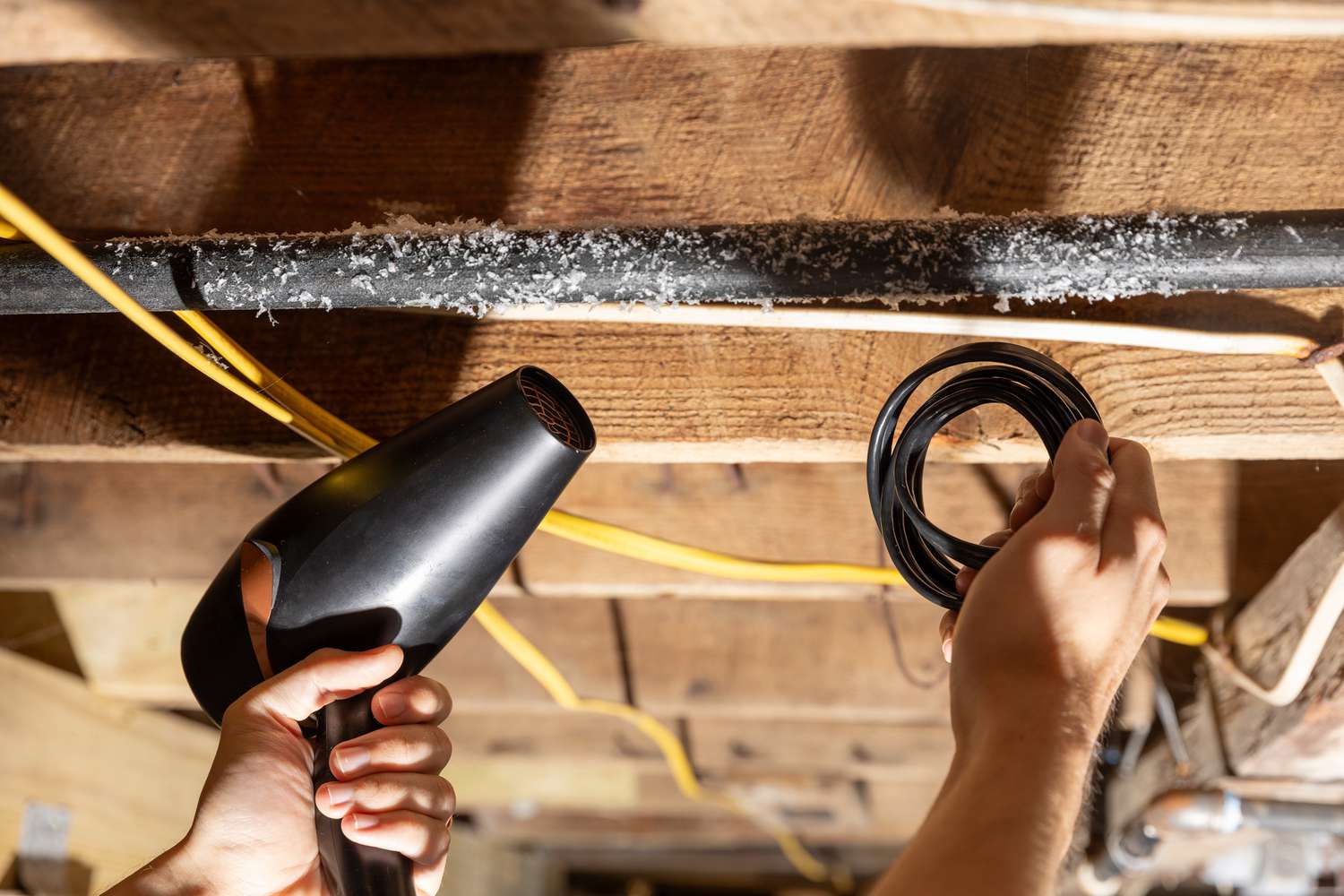
Gentle, even warmth is the goal. Raise the room temperature, use warm towels that are replaced as they cool, or carefully use a hair dryer on an accessible pipe. Start near the open faucet and work toward the suspected frozen section so that melting water has a path out.
A portable heater can also warm the surrounding space when it is positioned safely, used according to its instructions, and watched continuously. Keep all heat sources clear of insulation, curtains, cardboard, cleaning supplies, and other flammable materials. Never leave a heater or hair dryer unattended.
Thawing Mistakes That Can Make Damage Worse
Never use a torch, lighter, grill, propane heater, or any open flame to thaw plumbing. Flames can ignite nearby materials, damage pipe components, and create a serious fire risk. Avoid pouring boiling water over pipes as well, since sudden temperature changes can damage certain materials or worsen an existing crack.
Do not heat a sealed pipe with every faucet closed. Leaving the affected faucet open helps relieve pressure. If water is appearing from a wall, ceiling, floor, or cabinet, assume there may be a hidden break and turn off the main water supply.
When to Shut Off the Water
Shut off the main water supply immediately if a pipe has split, water is pooling, a ceiling is dripping, or the frozen section cannot be safely reached. After shutting off the supply, open several faucets to relieve remaining pressure and drain water from the lines.
Do not enter standing water near outlets, appliances, extension cords, or exposed wiring. Electrical danger transforms a plumbing inconvenience into an emergency requiring qualified assistance.
How to Reduce Frozen Pipe Risks Before a Cold Snap
- Insulate exposed water lines in crawl spaces, garages, basements, and attics.
- Seal drafts around windows, foundation openings, doors, and pipe penetrations.
- Keep indoor heat at a steady temperature, including when away from home.
- Open sink cabinets on exterior walls during severe cold.
- Disconnect, drain, and store outdoor hoses before freezing temperatures arrive.
- Use appropriate covers for outdoor faucets and know where the shutoff valve is located.
Should a Faucet Drip During Freezing Weather?
A small, steady trickle may help protect especially vulnerable pipes, such as lines running through unheated spaces or exterior walls. It is not a substitute for insulation, heat, or draft control. The Boston Water and Sewer Commission recommends allowing a slow trickle through faucets connected to unheated areas during extreme cold.
Vacant Homes, Rentals, and Post-Thaw Checks
Vacant properties need steady heat and regular checks during freezing weather. Tenants should know who can access the shutoff valve, while owners should document exposed plumbing and review insurance requirements for empty homes.
After pipes thaw, inspect visible lines, cabinets, ceilings, walls, floors, crawl spaces, water heaters, toilets, washing machines, and outdoor supply lines. Run water slowly, listen for unusual sounds, watch for pressure changes, and dry wet areas quickly. Photos can help document damage if a leak is discovered later.
Common Questions About Frozen Pipes
Can pipes freeze inside a heated home?
Yes. Drafts, exterior walls, poor insulation, and long periods of severe cold can expose indoor plumbing to freezing temperatures.
Do frozen pipes always burst?
No, but freezing can create damaging pressure. Even if the water returns to normal, inspect the pipe for any delayed leaks.
When is professional help needed?
Get help for burst pipes, hidden frozen lines, repeated freezing, major water loss, electrical hazards, or plumbing that remains blocked after careful warming.
Final Checklist for the Next Freeze
- Locate and test your knowledge of the main shutoff valve.
- Inspect exposed pipes, outdoor faucets, and draft-prone areas.
- Maintain steady indoor heat and open exterior-wall cabinets if needed.
- Prepare safe warming tools and emergency contact information.
- Inspect plumbing again after temperatures rise.
Frozen pipes are easier to manage when preparation begins before temperatures drop. Careful warming, quick water shutoff, and a thorough inspection after thawing can protect the home and limit damage from a winter plumbing emergency.