
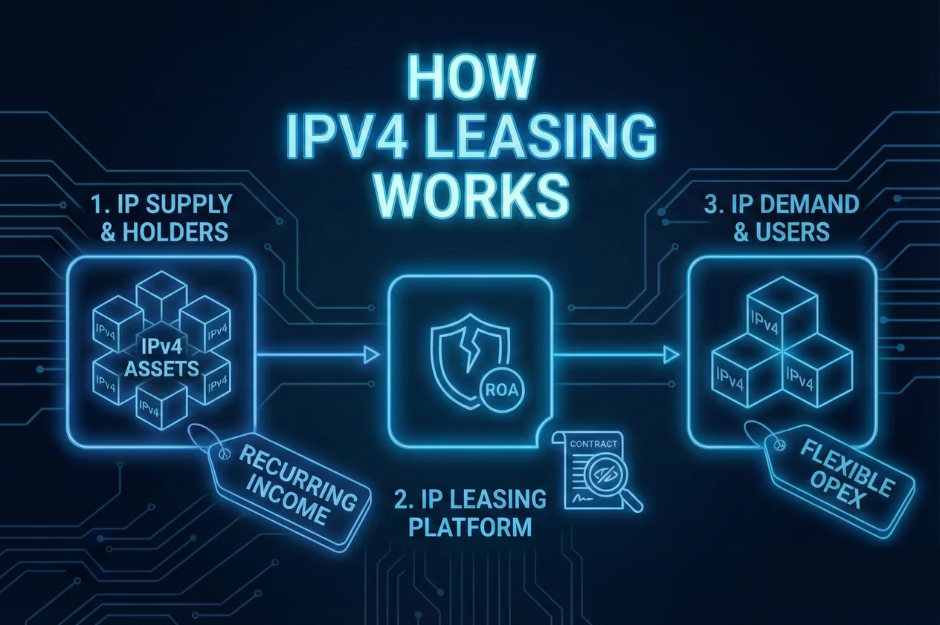

An IPv4 address is a unique numerical identifier that enables devices and systems to communicate over the internet. As the supply of available addresses has become increasingly scarce, businesses may choose to rent IPv4 addresses rather than purchase entire blocks. IPv4 rental supports hosting, cloud infrastructure, networking, email services, VPNs, and business applications. The process typically involves selecting addresses, completing verification, deploying them, and managing them throughout the rental period.
Why Businesses Prefer to Rent IPv4 Addresses?
IPv4 address renting provides companies with an elastic solution to use the IP resources they require without the need to buy them. IPv4 addresses are finite, thus making it expensive and tricky to purchase a big block. By renting, companies can acquire the right addresses for certain projects, services, or infrastructure and, at the same time, have control over costs.
It can also facilitate scaling since businesses are able to add and take away their IP requirement as needs fluctuate. For new businesses who ser rolling out online services or operating more than one server, renting IPv4 addresses can be a feasible solution and avoid making a big initial purchase.
Rent IPv4 Addresses: Working Process
Determine Your IP Requirements
The first thing to do is to calculate the number of IPv4 addresses your business requires and the reasons why you require them. Take into account your servers, applications, websites, network devices, and projected expansion. Being aware of these requirements can assist you to select a suitable IP range and not to spend money on the addresses that you will not utilize.
Select a Trustworthy Supplier
Find IPv4 rental providers and compare their available address space, costs, policies, and support. Ensure that the provider is explicit about the terms of ownership, routing, and use. The information on IP reputation and address history is necessary by a trustworthy provider prior to the close of the rental.
Choose an IPv4 Range
Select the necessary IPv4 block that will meet your technical requirements. Several providers can provide various ranges and subnet sizes; therefore, find one that fits your infrastructure. A smaller business might require fewer addresses than a bigger network might require a bigger block of addresses to support multiple servers and services.
Sign Rental Agreement
Once you choose the address range, peruse through the rental agreement. Verify the rental time, payment arrangements, use constraints, renewal, as well as the accountability of both parties. Ensure that the agreement is clear on how the addresses may be used throughout the rental period.
Set up and utilize the Addresses
After the confirmation of rental, the provider provides the routing and configuration advice. Configure the IPv4 addresses in the servers, routers, or other systems by your technical team. The correct network setup helps to ensure that the addresses are part of the current infrastructure.
Renew and Watch the Rental
Once deployed, keep an eye on the addresses on a regular basis, in terms of connectivity, reputation, and other unusual faults. Monitor rental due date and renewal. In case your business requires any change, negotiate with your provider to have more or less, or even change the rented IPv4 range.
What Can You Use Rented IPv4 Addresses For?
Business networking needs gets easier to achieve when you start renting IPv4 addresses. They can be used by companies to host websites, applications, databases, mail servers, VPN services, cloud infrastructure, and other systems with internet access. They may also be handy when companies require more addresses to add to the existing network without the need to actually buy permanent IPv4 resources.
Other organizations lease addresses to temporary projects, test environments, or infrastructure expansion, or services needing exclusive public IP addresses. When the technical configuration of a business necessitates it, businesses running multiple servers may use different addresses on the various services offered. Nevertheless, it should be used in accordance with the agreement of the provider, the internet policy, and the applicable laws.
Factors to Consider Before Renting IPv4 Addresses
IP Reputation and History
Before renting out the IPv4 addresses, check their history and reputation. Past activity that used to be classified as spam, malware, or abusive content can cause issues for your business. Ask the provider to answer questions about reputation checks and historical information.
Provider Reliability
Select a provider with transparent documentation, quick service, and reliable network services. Go through the provider’s rental terms and know how the technical problem is addressed. It may be easier to correct routing, configuration, or address-related issues through reliable communication.
Rental Terms and Pricing
Add up the rental price and not just the price advertised. Minimum rental amounts, deposit, establishment fees, renewal fees, and cancellation fees. Knowing these terms would assist you in knowing your real costs and prevent unforeseen costs.
Addresses Requirement
Find out the number of IPv4 addresses that your infrastructure really needs. Consider the implementation cost, whereas under-renting of addresses may lead to the need to make more changes in the future. Prepare your speech requirements.
Usage and Compliance Policies
Check the acceptable use policy of the provider when renting IPv4 addresses. Certain providers have particular activities that are not allowed or certain uses that demand certain documentation. Ensure that the applications you will be using are allowed by the rental agreement, network policies, and the law; otherwise, service will be disrupted.
Explore Flexible IPv4 Rental Options with IPV4 TradeHub
Your business shouldn’t have to let IPv4 scarcity slow down its infrastructure plans. Whether you’re expanding servers, launching new projects, or supporting growing network requirements, understanding your rental options is the first step. Explore IPv4 Tradehub to discover IPv4 resources that align with your business requirements, budget, and deployment goals.