
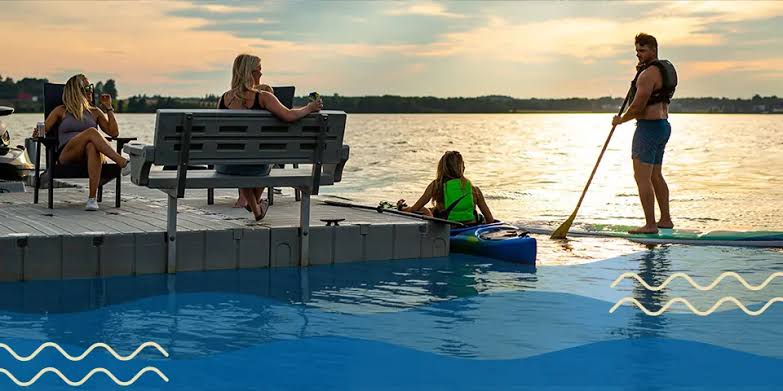

Lake levels can change quite a bit throughout the year, leaving some waterfront structures difficult to use. A dock that sits at the perfect height in summer might be several feet above the water by fall. Floating docks address this problem by rising and falling with the water, keeping boat access more consistent without requiring major adjustments to the structure.
A Dock That Moves With the Water Instead of Fighting It
Fixed docks depend on permanent supports that stay at one elevation regardless of water conditions. Floating systems work differently because buoyant chambers or pontoons support the platform, allowing it to follow changes in water height. This makes them especially useful on reservoirs where controlled releases, rainfall, and seasonal demand can cause substantial fluctuations. Rather than leaving boat owners climbing down from an elevated platform, a floating dock keeps its deck at a relatively consistent height above the water.
Professional boat dock builders design these structures with enough flotation to support the dock’s weight, expected occupants, and equipment. Proper weight distribution also matters because uneven loads can cause sections to tilt or sit lower than intended.
Why Changing Water Levels Make Fixed Docks Less Practical
A fixed dock can work well where water depths remain fairly stable, but larger changes create access problems. During low water, boats may sit too far below the walking surface for comfortable boarding. Higher water can bring boats dangerously close to overhead structures or even submerge portions of a fixed platform.
Water depth also determines whether vessels can safely approach the dock. Floating structures maintain their height relative to the surface, although they cannot prevent boats from grounding when the lake becomes too shallow. Experienced contractors account for the lowest expected water level before deciding where a dock should sit.
Keeping the Walkway Usable as the Shoreline Changes
Connecting a moving platform to solid ground requires careful planning. Gangways typically use hinged connections that allow their angle to change as the dock rises or falls. Their length affects how steep the walkway becomes during low water, which matters for anyone carrying supplies, fishing equipment, or boating gear.
Shoreline conditions influence the connection as well. Steep banks may require longer gangways or elevated landings, while shallow slopes can expose muddy ground as water recedes. Floating dock contractors evaluate the expected range of movement and determine whether the walkway will remain accessible throughout normal seasonal changes.
How Does the Dock Stay in Place Without Permanent Supports?
Although the platform floats, it still needs a reliable anchoring system. Wind, waves, and boat movement can push an unsecured dock toward the shoreline or neighboring structures. Depending on water depth and bottom conditions, contractors may use guide piles, underwater anchors, or cable arrangements to control horizontal movement while allowing vertical travel.
Anchor placement deserves particular attention on lakes with changing elevations. Cables must accommodate water movement without becoming excessively loose or placing too much tension on attachment points. A properly engineered arrangement helps prevent the dock from drifting, twisting, or pulling against its gangway as conditions change.
Aluminum Construction Makes Floating Systems Easier to Maintain
Material selection affects how well a floating structure performs over time. Aluminum boat docks offer corrosion-resistant framing that works well in freshwater environments and reduces the maintenance associated with painted steel components. Their lighter weight can also reduce the amount of flotation needed compared with heavier framing designs, depending on the structure’s engineering.
Decking and hardware still require attention. Composite or aluminum decking can provide durable walking surfaces, while marine-grade fasteners help protect connections exposed to moisture. Owners should inspect flotation units, hinges, and anchoring equipment periodically because these parts experience movement throughout the dock’s service life.
What Happens During Heavy Rain or Sudden Water Releases?
Reservoir operators sometimes release water quickly, while storms can raise lake levels within a short period. Floating docks can accommodate these changes within their designed operating range, provided their anchors and shoreline connections allow sufficient movement. However, unusually strong currents, floating debris, and extreme flooding can still threaten the structure.
A dock’s maximum travel range should account for known high-water elevations rather than average conditions alone. Contractors also consider whether nearby trees, retaining walls, or overhead structures could interfere with the platform during unusually high water. These details help determine whether additional clearance or specialized anchoring is necessary.
Finding the Right Floating Dock Setup for the Property
Different waterfront properties require different floating configurations. A narrow shoreline may benefit from a compact platform, while larger recreational properties could accommodate covered slips, swimming areas, or connected dock sections. Searching for dock builders near me can help property owners identify companies familiar with local water conditions, installation requirements, and available dock designs.
For properties affected by seasonal water fluctuations, Bar H Solutions provides aluminum dock design, sales, and installation services, including floating configurations suited to different waterfront needs. The company can help homeowners evaluate dock layouts, shoreline access, flotation requirements, and installation options based on how their property is used and how its water levels change throughout the year.