

Today, businesses need to find ways to stand out, run more smoothly, and better connect with their audience. More and more, the solution is Artificial Intelligence (AI) used in SEO and marketing.
AI is now a part of daily life and is changing how companies run their marketing and online strategies. If you ignore AI, you might fall behind while competitors get ahead using AI to make their SEO and marketing stronger.
Companies that want to stay ahead should focus on how fast and how well they can bring AI into their main business activities. Using AI brings quicker processes, better insights, and a more personal way to reach and win over customers. To get more details on how AI can help your business online, visit https://non.agency/.
What Does AI Mean in SEO and Marketing?
AI in SEO and marketing means using smart computer systems to do tasks that usually need human thinking. This covers things like understanding language, spotting patterns in data, making choices based on information, and running marketing campaigns automatically.
Think of AI as a smart assistant that can handle lots of information much faster than people can. It gets better with every customer touch, every click, and every bit of data, so it can make smarter marketing choices over time.
How Is AI Different from Regular Automation?
Regular automation follows fixed rules to do the same job over and over. Think of it like a robot doing only what you tell it to do. AI goes beyond that-it can learn, change, and get smarter.
For example, while regular email automation sends out scheduled emails, an AI-powered system will look at a subscriber’s actions, pick the right time for each person, and change messages based on how they behave. This means AI can learn and adjust in real-time, while regular automation stays the same unless someone updates it.
What Kinds of AI Are Common in Online Marketing?
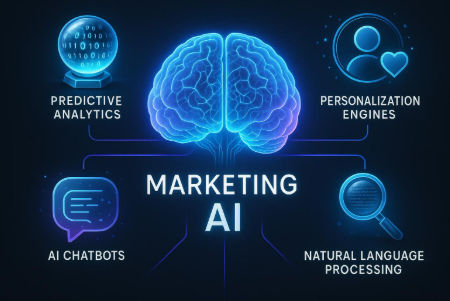
There are many types of AI used in marketing and SEO. The most well-known are Large Language Models (LLMs), like ChatGPT, Gemini, or Claude, which can write text, answer questions, and give suggestions. Other forms of AI include:
-
Predictive analytics-guessing future trends and customer actions
-
Personalization engines-suggesting products or content, like Netflix or Spotify
-
Natural language processing-for understanding reviews and user intent
-
Computer vision-reviewing images and videos
-
AI chatbots-for 24/7 customer support
-
Smart content optimization and automated ad-buying platforms
These tools all help make marketing more efficient and directed at each person’s needs.
How AI Changes SEO and Marketing
AI isn’t just another marketing tool. It’s changing how marketing and SEO work by handling huge amounts of data, helping understand what customers do, and keeping up with fast-changing search engines. Manual methods are no longer enough, and AI provides the power and speed needed to keep up with these changes.
Switching from Keywords to Smart, AI-Based Strategies
In the past, SEO focused on choosing the right keywords and placing them in content. Now, thanks to AI, the key is understanding what people are really looking for.
AI can check huge datasets to find out not just what people type, but why they search those terms. This means you can aim for very specific searches like “best gluten-free bakery London” instead of just “bakery London,” and you can create content that solves your customers’ actual problems.
AI can also look at online discussions, reviews, and more, to show you what topics your audience cares about most.
AI Inside Search Engines
Search engines like Google use AI to read queries, rank pages, and personalize results. Google’s new experiences, like AI Overviews, show AI-generated answers at the top of results, meaning users often get answers without clicking a website.
For your content to appear, it needs to be easy for AI to read and pull information from. Search engines keep learning from what users do, so your marketing and SEO plans need to be flexible to stay visible and bring in visitors.
Why Businesses Should Use AI in SEO and Marketing
There are many strong reasons to use AI in your online marketing and SEO. Adopting AI isn’t just about staying up to date-it helps you work more efficiently, save money, connect with your customers better, and make smarter business choices. Here’s how AI can help:
Saves Time and Cuts Costs
AI can handle repetitive work that used to take a lot of time, like sorting emails, posting on social media, and basic ad buying. AI can also speed up more complicated processes like approving content or onboarding customers, and it can optimize campaigns while they’re active. This allows your team to focus on creative and more valuable tasks, making your efforts quicker and saving money.
Makes Customer Experience More Personal
Customers want personal attention, and AI can make that possible for thousands of people at once.
By looking at people’s browsing, buying, and interacting, AI can guess what they want next and send targeted messages or offers. This creates a smoother, more personal experience and can even adjust prices for each customer type, making shoppers happier and more likely to return.
Speeds Up Content Creation and Improvement
Creating quality content regularly is tough. AI tools can help by coming up with ideas, outlines, or even full articles and social posts quickly. They can also look at what’s popular in your industry and suggest edits for your existing pages to include the right keywords and structure.
Writers can then use their skills to make the content fit your brand, while AI takes care of the heavy lifting.
Supports Smarter Decisions With Data
With so much marketing data, picking out useful insights is hard without help. AI can scan all that data, spot trends, and explain why things are happening, so your decisions are based on facts, not guesswork. This leads to better targeting, improved campaigns, and increased returns on investment.
Helps Find and Prioritize Good Leads
AI can look at past data and current customer actions to find and rank the leads that are most likely to buy. Scores for each lead update as new actions are taken, like clicking certain pages or downloading something. This lets sales teams spend more time with people who are ready to buy, and less on dead ends. AI can also predict future market trends so you can prepare and act quickly.
Main Ways AI Is Used in SEO and Marketing
AI can be used in almost every stage of the marketing and sales process, from research and creating content to talking with customers and checking your results. Here are key areas:
Potential Problems With AI in Marketing
AI can do a lot, but bringing it into your company isn’t always easy. Here are some things to watch for:
Data Quality and Bias
AI only works as well as the data it gets. If your data is old, wrong, or biased, your AI might make poor choices-like showing ads only to one group while missing out on others. Keeping your data clean and regularly checking for bias keeps marketing fair and accurate.
Privacy and Security
AI needs lots of customer data, which means new risks for privacy and security. Hacking, leaks, or breaking privacy laws like GDPR can cause trouble. Encrypt data, use anonymization, and always ask customers for permission to use their info. Explain what you do with their data to build trust.
Working with Your Current Marketing Tools
Adding AI to old systems doesn’t always go smoothly. If tools can’t share data or work together, your AI won’t have enough information to be useful. Choose AI tools that connect easily to your current systems, or bring in integration specialists to help things run smoothly.
High Upfront and Ongoing Costs
AI tools can be expensive to set up, and you may need to buy software, upgrade systems, or hire new staff. There are also ongoing costs for maintenance and training. Start with simple projects that solve urgent problems, show results early, and grow from there to spread out the cost and risk.
Team Skill Gaps
Your marketing team may not know much about AI. Without enough training, they might not get the most out of your investment. Spend time and resources on workshops and easy-to-use platforms, so your team feels confident working with new tools.
Finding the Right Mix of AI and Human Input
If you depend too much on AI, your marketing can feel cold or unoriginal. AI doesn’t understand emotion or culture the way people do. It’s important to let AI handle routine work, while letting your team create strategies, connect with customers, and tell your brand’s story in a genuine way.
How to Start Using AI in Your Marketing
Using AI is an ongoing process. Planning, starting small, and keeping an eye on results will make AI work better in your business:
-
Set Clear Goals and Measurements
-
Decide what problems you want AI to solve.
-
Pick simple, trackable targets, like “increase lead quality by 25%” or “cut response times by half.”
-
-
Check Your Data and Systems
-
Review all your current data for accuracy and gaps.
-
Make sure everything is formatted well and nothing important is missing.
-
-
Pick the Right Tools
-
Choose AI that fits your goals and can grow as you do.
-
Focus on tools your team will really use and that connect with your other systems.
-
-
Start Small with a Pilot
-
Test AI on a single task-like email subject lines or one segment of customers.
-
Measure the results before expanding, so you know what works.
-
-
Train Your Team
-
Provide practical training and encourage learning.
-
Build a company environment where testing new tools is supported and mistakes are seen as learning.
-
-
Track and Improve
-
Keep reviewing results and adjust as you go.
-
Share successes and struggles, and use feedback to get better.
-
-
Stay Ethical and Legal
-
Follow privacy laws and keep customer data safe.
-
Tell customers when AI is used and keep things transparent.
-
What’s Next for AI in SEO and Marketing?
AI’s role in marketing is getting bigger and more important each year. In the near future, we’ll see more advanced tools and deeper use of AI in all marketing steps. AI isn’t a fad. It’s a core part of how businesses will attract and keep customers online.
Does SEO Still Matter?
Some worry that AI will replace SEO. Actually, SEO is changing-not going away. To get found in searches run by AI, your content needs to answer questions clearly and be organized for easy reading by both people and AI. The job of SEO will focus more on delivering value and less on simply placing keywords.
New Directions: Generative Search and AI-Created Content
Generative Search and advanced AI can answer people’s questions directly in search results, so you’ll need to have clear, direct answers and organized content. Generative AI tools will soon be able to help create not just content, but whole campaigns and deeply personal messages, raising the bar for marketing online.
Why Start Now?
Businesses that use AI early have an advantage. They can better understand what customers want, make smarter choices, and move quickly as things change online. Using AI lets you target your marketing, spend less, and get better results before your competitors catch up.
Key Points for Using AI in SEO and Marketing
AI is more than the latest trend-it’s a big step forward in helping your business run smoother and reach customers more effectively.
-
Let AI handle boring or complex data while your people use their skills to connect with customers and set strategies.
-
The best marketing uses both AI and human input: AI brings speed and insights; people bring creativity and real connection.
-
Keep learning, follow the rules, and use AI as a tool to build longer-lasting customer relationships-not just for quick wins.
-
Adopting AI should be done thoughtfully and with a focus on ethics and results. Make sure it feels natural to your brand and benefits your customers.
In short, using AI in marketing isn’t just about technology; it’s about using new tools to keep your business growing and your customers happy. Combine your team’s strengths with the power of AI, and you’ll see stronger marketing, more sales, and a better experience for your customers.