

Key Takeaways
- Low maintenance begins with a practical site plan, not a collection of expensive features.
- Clear zones for cooking, dining, relaxing, and storage make outdoor spaces easier to use and clean.
- Every outdoor material needs some care, but the right choice can reduce refinishing, repairs, and replacement.
- Plants, drainage, shade, lighting, and storage should be planned together rather than added later.
- A short seasonal routine prevents small issues from becoming costly problems.
A low-maintenance outdoor living area should support everyday routines without turning every weekend into a list of chores. Whether the goal is a compact patio, a family-friendly backyard, or a polished entertaining space, smart planning matters more than adding as many features as possible. Experienced luxury landscapers often begin by looking at how a household will actually use the space, including where people enter, eat, relax, store equipment, and move through the yard. Low maintenance does not mean maintenance-free. Outdoor surfaces still need cleaning, plants need attention while they establish, and drainage systems need occasional inspections. The goal is to reduce unnecessary work by selecting durable materials, matching plants to the site, and avoiding layouts that trap dirt, leaves, standing water, or clutter.
Why Low Maintenance Starts With Planning
Start by defining what low maintenance means for your household. For one family, it may mean less mowing and watering. For another, it may mean fewer surfaces to seal, less pruning, and easy cleanup after outdoor meals. A beautiful backyard can still be difficult to own if furniture blocks traffic, planting beds spill onto walkways, or rainwater collects beside the house. Think through daily use before choosing materials or features. A household with children, pets, regular guests, and a grill needs different circulation and storage than a quiet garden retreat. Spending more effort on the plan and installation can reduce the need for corrections later.
Step 1: Study The Yard Before Choosing Features
Observe the property at different times of day. Map sunny and shaded areas, wind exposure, slopes, views, mature trees, wet spots, and places where leaves tend to collect. After a heavy rain, note where water flows, pools, or washes soil away. These details influence everything from patio placement to plant selection. Also consider access. Contractors need room for materials and equipment, while homeowners need reasonable access for future repairs, furniture delivery, and routine cleaning. Before construction begins, review local requirements for permits, setbacks, utility lines, drainage, and neighborhood rules.
Step 2: Build The Layout Around Real Life
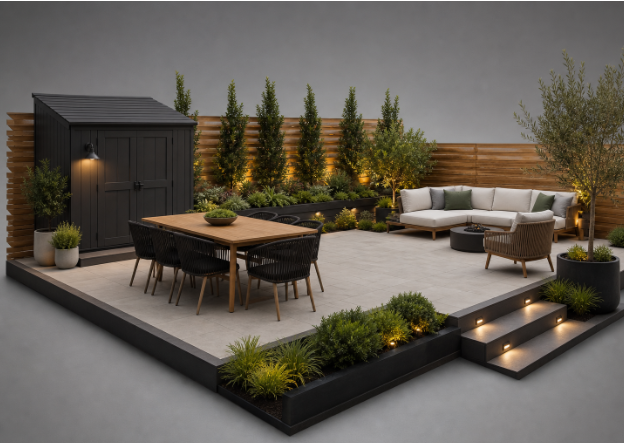
Place dining areas near the kitchen or a main entry so carrying food and dishes is simple. Keep cooking zones out of major walkways, and leave enough room to pull out chairs, open storage, and move safely around grills or fire features.
Create Clear Outdoor Zones
- Dining: Close to the house, with shade or weather protection when possible.
- Lounging: Positioned for the best view, privacy, and afternoon comfort.
- Play and pets: Away from delicate plantings and hot cooking areas.
- Gardening: Near water access and a convenient tool-storage area.
- Service paths: Clear routes to gates, sheds, bins, hoses, and utility equipment.
Simple layouts are often easier to maintain than designs with many tight corners, tiny patios, and disconnected paths. Fewer awkward edges mean fewer places for weeds, debris, and moisture to build up.
Step 3: Choose Surfaces That Match The Workload
Material selection should account for climate, drainage, shade, foot traffic, and budget. Natural wood can feel warm and classic, but it may require staining or sealing. Composite decking can reduce the need for refinishing, though it still benefits from regular washing. Concrete, brick, stone, and porcelain each have distinct needs regarding staining, settling, cracking, traction, and winter conditions. Ask for written maintenance guidance before selecting any surface. The visible finish matters, but proper framing, base preparation, jointing, and drainage matter just as much. A premium material installed over a weak base can become a high-maintenance problem.
Step 4: Use Plants That Fit The Site
Choose plants according to sun exposure, soil type, moisture levels, mature size, and local weather patterns. Group plants with similar water needs so irrigation is easier to manage. Mulch and suitable ground covers can reduce bare soil, suppress weeds, and help soil retain moisture. Native and climate-suitable plants can be a sensible choice because they are adapted to regional conditions and may need less intervention once established. However, “native” does mean no care is required. New plants still need watering, monitoring, and occasional pruning during their first seasons.
Step 5: Plan For Rain Before It Becomes A Problem
Drainage should be addressed before patios, decks, retaining walls, or planting beds are completed. Direct downspouts away from foundations and heavily used paths. Grade surfaces so water moves away from doors, walls, and structural posts rather than sitting against them. Where site conditions and local rules allow, permeable paving, planted swales, rain gardens, and strategically placed beds can help slow runoff and support healthier soil. The U.S. Environmental Protection Agency explains how green infrastructure can help manage rainwater through plants, soil, and permeable materials.
Step 6: Add Shade And Weather Protection
Umbrellas, pergolas, covered patios, retractable shade, and screened areas can all improve comfort. Select a solution based on when the space is used and where the sun comes from, not appearance alone. Consider wind, snow load, rain runoff, tree debris, and access for cleaning before installing a permanent structure.
Step 7: Keep Outdoor Lighting Simple
Light steps, entrances, paths, cooking areas, and grade changes first. A few focused fixtures are usually more effective than lighting every corner of the yard. Choose weather-rated products, keep wiring accessible for service, and use timers or sensors only when they solve a practical need.
Step 8: Design Storage Into The Plan
Storage is one of the easiest ways to make an outdoor area feel calmer and easier to maintain. Keep cushions, toys, hoses, tools, and seasonal items near where they are used. Benches with storage, dry sheds, and protected cabinets can shorten cleanup after meals and help prevent clutter from accumulating.
What To Ask Before Hiring A Contractor
- How will the design handle rainwater and runoff?
- What care will each surface and feature need during the first five years?
- Which permits, inspections, and utility checks are required?
- How will existing trees, roots, and drainage paths be protected?
- What happens if grading or soil conditions change during construction?
- Who will provide final care instructions for materials, lighting, and plantings?
A Simple Seasonal Maintenance Plan
- Spring: Inspect steps, railings, surfaces, drainage points, and mulch.
- Summer: Watch irrigation, remove weeds early, and clean cooking areas.
- Fall: Clear leaves from gutters, drains, paths, and planting beds.
- Winter: Check for pooling water, loose materials, cracked surfaces, and freeze-related damage.
During dry periods, adjust watering according to plant needs, local restrictions, and soil conditions. The EPA offers useful guidance on water-efficient landscaping for homeowners considering drought preparation and more resilient planting choices.
Common Mistakes That Increase Upkeep
- Choosing plants only for appearance instead of site conditions.
- Ignoring water flow until construction is underway.
- Using too many materials in a small space.
- Placing furniture beneath roof runoff or heavy leaf drop.
- Creating tight corners that collect dirt and moisture.
- Assuming durable materials never need cleaning or inspection.
Final Planning Checklist
A successful low-maintenance landscape begins with thoughtful planning rather than rushing into plant or material selection. Document sun exposure, shade patterns, soil conditions, drainage, wind, and how different areas of the yard are used before work begins. Include clear walking paths, practical storage, suitable plants, reliable drainage, and durable materials chosen for both performance and appearance. Designing with long-term maintenance in mind can reduce unnecessary watering, pruning, weeding, and repairs while keeping the landscape functional and attractive. The objective is not to eliminate every outdoor task, but to create a landscape that is easier to care for year-round. By making maintenance smaller, more predictable, and easier to complete, homeowners can spend less time on upkeep and more time enjoying their outdoor space.