

There is a specific kind of founder advantage that gets less attention than technical skills, fundraising ability, or market timing despite being one of the most reliable predictors of early SaaS success. That advantage is community membership, the state of being a genuine, long-standing participant in a specific professional or interest community. It gives a founder something that no amount of market research can fully replicate: real understanding of how people in that community think about their problems, what language they use to describe them, what solutions they have already tried and found wanting, and what they would be genuinely excited to have someone build for them.
Most people who have this advantage do not recognize it as an advantage because they experience it as simply knowing their field. The freelance accountant who has been participating in accounting software forums for five years and knows exactly what features every existing product is missing. The independent personal trainer who has been in fitness professional communities long enough to understand precisely why every existing gym management software frustrates people who use it. The Etsy seller who has been in handmade business communities long enough to know what operational problem every seller complains about with the same frustration every single time it comes up.
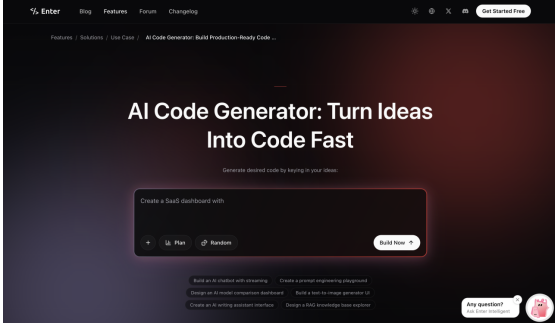
These are founder advantages of the first order, and the tools now exist to act on them without requiring technical skills that community members in most fields do not have. A code maker that handles the implementation of clearly specified functionality means that the person who understands the problem most deeply is no longer blocked from building the solution by a technical barrier they cannot overcome alone. Enter Pro has been genuinely useful for community-native founders building their first software products and the pattern of what works for them is worth understanding in detail.
Why Community Members Make Better Early-Stage Founders
The case for community membership as a founder advantage is not sentimental. It is practical and it shows up in measurable ways in the early stages of a product’s development where most SaaS products fail.
A founder who is a genuine community member already speaks the language of the potential user without having to learn it. The copy on the marketing site sounds like someone who understands the problem from the inside rather than someone who researched it. The feature decisions reflect real workflow requirements rather than assumed ones. The positioning resonates immediately with the people it is aimed at because it is written by someone who has experienced the same frustrations.
A founder who is not a community member and is building for a community they researched rather than participated in is working from a model of that community that is necessarily incomplete. They know what the community says publicly about its problems. They do not know the unspoken context that shapes why those problems exist, which attempted solutions have already failed, what the social dynamics of the community mean for how a new product will be received, or what the real decision-making process looks like when a member of that community evaluates a new tool.
Turning Community Frustration Into Product Specification
The community member who has decided to build a product for their community has access to a continuous source of product specification that most founders spend months trying to generate through user interviews and customer discovery processes. Every complaint thread in the community forum. Every feature request posted to existing product feedback channels. Every workaround shared by a community member who figured out how to make an inadequate tool do something it was not designed to do.
These are product specifications written by the intended users in their own language and they are extraordinarily valuable for a founder who knows how to read them. Not as a list of features to build but as a window into the underlying needs that the complaints and workarounds are trying to address. The feature request is rarely the actual requirement. The frustration that generated it is.
A community member reading these complaints has the contextual knowledge to understand what the frustration is actually about rather than taking the stated feature request at face value. That interpretive capability is one of the most practically useful aspects of community membership as a founder advantage and it is not something that can be acquired through research in the way that surface-level knowledge of a community can be.
Choosing Infrastructure That Lets You Move at Community Speed
Community-native founders building their first SaaS products face a specific challenge that is different from the challenge facing technical founders building in categories they understand primarily through research. They typically need to move fast enough to capitalize on their community advantage before someone with more technical resources notices the same opportunity, and they typically have less experience with the technical and commercial infrastructure that a SaaS product requires.
A SaaS website builder that handles authentication, billing, and the marketing site without requiring custom development removes the infrastructure bottleneck that would otherwise slow a community-native founder significantly. The ability to have a properly functioning product with a professional marketing site in front of community members quickly enough that the founder’s community credibility is still intact and still relevant is what makes the community advantage commercially actionable rather than just theoretically useful.
Enter Pro gives community-native founders the commercial infrastructure foundation they need without requiring the technical depth that building it from scratch would demand, which is the specific combination that makes acting on a community advantage practically achievable for founders whose expertise is in the community rather than in software development.
Launching to a Community Without Burning Your Reputation
The community membership that gives a founder their product advantage is also an asset they can damage by launching badly. A community member who launches a product to their community and asks for support in ways that feel extractive rather than genuinely valuable, who oversells what the product currently does, who handles early bugs and limitations defensively rather than transparently, damages the community standing that was their primary asset going into the launch.
The community-native SaaS launch that works is built on the same values that built the founder’s community standing in the first place. Honesty about what the product currently does and what it does not yet do. Genuine invitation for feedback from people whose opinion the founder respects. Transparent communication about how early user feedback is shaping development. Pricing that reflects the current stage of the product rather than the full value of a finished version.
Community members who have watched a founder participate genuinely for years before asking them to try a product extend a degree of goodwill and patience with early limitations that no amount of launch marketing can generate with an audience that has no prior relationship with the founder. That goodwill is the most valuable asset a community-native founder has at launch and it is entirely dependent on having spent the time in the community before asking anything of it.
Building in Public Within the Community
The community-native founder has a natural venue for building in public that founders without community membership have to construct from scratch. Sharing development updates in the community where the product is being built, asking questions about product decisions in the forums where the intended users already spend time, and documenting the building process on the content channels that the community already follows all create the kind of pre-launch awareness and investment that makes a launch land rather than disappear.
This building in public within the community is different from the broader building in public practice of sharing development updates on general social media platforms. The audience in the community has specific context about the problem being solved that makes development updates genuinely interesting rather than abstractly interesting. They understand what the product is trying to do because they experience the same problem and their engagement with development updates reflects real interest in whether the product will solve it rather than general support for an independent builder doing something admirable.
Enter Pro makes maintaining a public development journal alongside the marketing site straightforward enough that the building in public practice does not require a separate platform or a separate content strategy from the commercial infrastructure being built simultaneously.
The Support Advantage of Serving People You Know
The customer support experience for a community-native SaaS founder is qualitatively different from the support experience of a founder serving an anonymous user base they have never interacted with directly. The early users of a community-native product are people the founder knows, or knows of, or has interacted with in community contexts before the product existed. That prior relationship changes every support interaction.
The user who reports a bug to a founder they know from community discussions is more patient with the response time, more forgiving of the limitation, and more likely to provide the detailed context that makes the bug genuinely fixable rather than submitting a vague report that requires multiple back-and-forth exchanges to understand. The founder responding to that report is more motivated to fix it quickly because the user is not an abstract customer number but a specific person whose problem the founder cares about solving.
This support dynamic is not infinitely scalable but at the stage of a SaaS product where support relationships are most consequential for product development and user retention, the community-native founder has an advantage that compounds in the quality of early product decisions.
Conclusion
Building a SaaS product for a community you genuinely belong to is not the most talked about path into software entrepreneurship and it is not the path that generates the most dramatic founding stories. What it generates instead is a consistent pattern of early product-market fit, credible distribution from the first day of launch, and the kind of genuine user investment in the product’s success that founders who built for communities they researched rather than lived in spend years trying to manufacture. The community membership was not acquired as a founder strategy. It existed before the product idea. Recognizing it as the advantage it is and building on it deliberately is the insight that turns a community member into a founder with a genuine head start.