
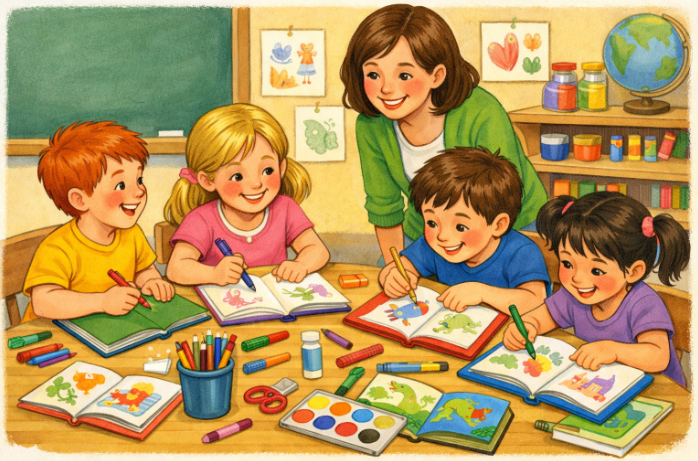

Encouraging creative publishing in elementary classrooms offers young learners a unique opportunity to develop essential skills while building excitement about literacy. When educators guide students through the cycle of writing, illustrating, and publishing their own work, they create an environment ripe for self-expression, skill-building, and memorable collaboration. Interested in transforming your classroom into a hub of creativity? Get started today to unlock your students’ publishing potential.
From improving writing proficiency to strengthening social skills, classroom publishing projects have proven to be a game-changer for elementary students. By integrating technology and presenting students’ work to a broader audience, teachers help boost confidence and meet the evolving demands of modern literacy education. Real stories of success and thoughtful celebration of student achievements further amplify the benefits of student-led publishing.
In this article, discover the core benefits of student publishing, explore a practical step-by-step guide for classroom projects, learn from real-life case studies, and find out how technology enhances engagement and creativity within publishing projects.
Read on to see how you can enrich your curriculum by harnessing the power of student publishing.
Benefits of Student Publishing
When students are tasked with publishing their own stories, the results can be remarkable. Not only does the act of writing and illustrating encourage creativity, but the final product also serves as a powerful motivator for students to craft their best work. Having their stories recognized and shared with an audience instills pride and encourages a positive attitude toward literacy.
- Enhanced Literacy Skills: Engaging in the full cycle of story creation naturally improves reading and writing proficiency. Even at a young age, students who publish their work develop a stronger command of grammar, spelling, and storytelling techniques.
- Increased Confidence: Having their ideas validated by seeing their work in print or digital format helps to boost self-esteem and motivates students to participate more actively in classroom learning.
- Collaboration: Many projects are team-oriented, fostering cooperation, communication, and mutual respect among students. As peers critique, revise, and illustrate stories together, they learn the value of working toward a shared goal.
Steps to Implement Publishing Projects
Teachers looking to launch a publishing project can follow this structured approach to maximize student engagement and success:
- Choose a Theme: Select an engaging topic, such as local legends, environmental science, or even imaginative fiction that resonates with your class’s interests and learning objectives.
- Plan the Content: Map out the book’s structure by dividing sections among individuals or groups, ensuring each student has a clear role in storytelling and illustrating.
- Draft and Illustrate: Guide students through drafting their sections, providing feedback and encouragement, and then illustrating each story to enhance visual interest and creativity.
- Edit and Compile: Edit collaboratively, focusing on story coherence and presentation. Compiling stories into one polished book reinforces teamwork and teaches students about the editing process.
- Publish: Use classroom printers or online publishing platforms to create physical or digital copies that students can share with their families and community.
Real-Life Examples of Successful Projects
Across the country, teachers and students are collaborating to produce inspiring works. At Newton Parrish Elementary School in Owensboro, first graders authored and illustrated an original book titled “All About Birds.” The project culminated in a festive publishing party that celebrated every student’s contribution.
Meanwhile, every fourth grader at Northside Elementary took part in the “Young Authors: Publishing Their Voices” initiative, resulting in a professionally printed book for each student. Such programs are making publishing accessible and exciting for kids (see WEAU News for more details).
For further reference on successful classroom publishing and its impact, see similar cases documented by Edutopia, which highlight the importance of authentic audiences in student publishing initiatives.
Integrating Technology in Publishing Projects
Technology opens the door to new methods of creative expression and helps to modernize the classroom publishing model. Incorporating digital elements not only empowers students with next-generation skills but also multiplies their reach and the forms their work can take.
- Podcasting: At Heritage Elementary, second graders launched a podcast called “Only Readers in the Building.” By sharing book reviews in this engaging audio format, students refined their communication skills and explored new storytelling media.
- Digital Storytelling: With widely available digital tools and story creation platforms, students can easily create, edit, and share their work with classmates, parents, or a global audience, making publishing projects more accessible than ever.
Discover additional strategies for integrating technology into literacy by reviewing Scholastic’s guidelines, which spotlight practical ideas for a modern publishing center.
Celebrating Student Achievements
Recognition is a vital part of the process. Celebrating published student work cements the learning experience while instilling pride:
- Publishing Parties: Host end-of-project gatherings where students present their books to the class, parents, or even the wider community, making each child feel like a real author.
- Author Readings: Give students opportunities to read their stories aloud, encouraging public speaking and confidence in sharing their ideas.
- Display Copies: Place finished books in the school library or a community space, ensuring students’ efforts are valued long after the project is complete.
Conclusion
Creative publishing projects enrich classroom culture, strengthen literacy, and elevate student voice. By empowering students to craft and publish their own stories with the support of traditional and digital tools, educators create experiences that last a lifetime. With well-planned initiatives, each student can discover the joy of authorship, learn the art of collaboration, and build confidence in their abilities both in and out of the classroom.