
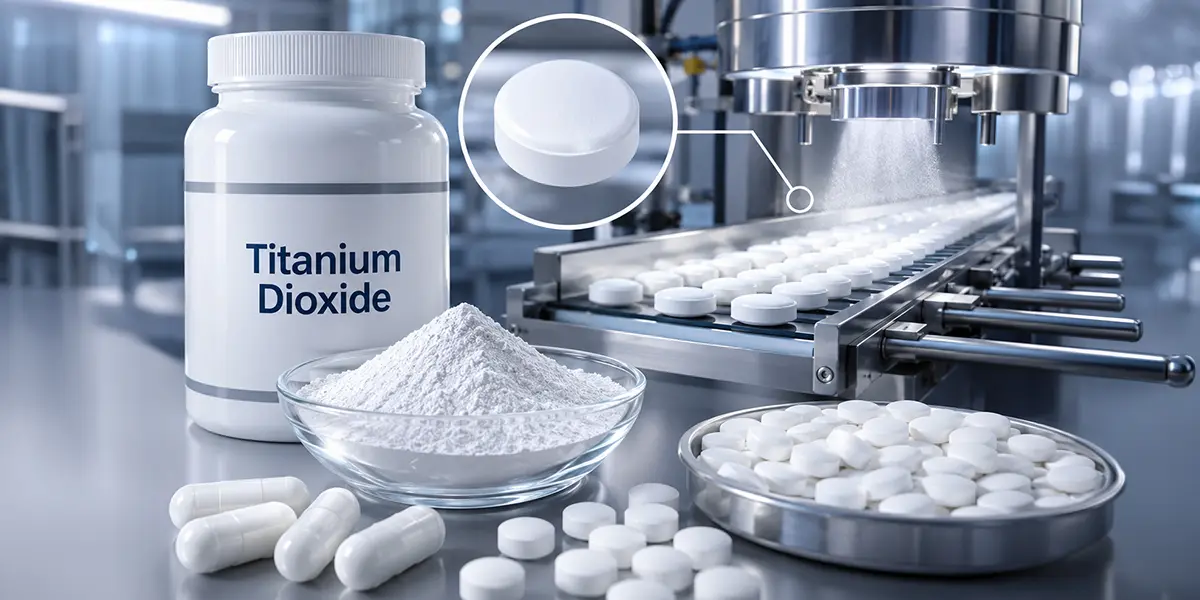

Titanium dioxide plays an important role in modern manufacturing. Many industries use this white pigment to improve product appearance, colour, and performance. It has become an essential raw material in plastics, packaging, cosmetics, paints, and chemical production. Manufacturers choose titanium dioxide because it offers excellent whiteness, opacity, and light-scattering properties. It also helps create consistent colours in different products. From plastic bottles to cosmetic formulations, this material supports many everyday manufacturing processes.
However, choosing the right grade is important. Each industry has different production needs. Understanding its properties and applications helps titanium dioxide manufacturers make better purchasing decisions.
The Chemical Properties of Titanium Dioxide
titanium dioxide, commonly called TiO2, is a white inorganic compound made from titanium and oxygen. It occurs naturally in minerals such as rutile and anatase. Manufacturers process and refine it into a fine powder for industrial applications. One of its most valuable properties is its high refractive index. This property allows titanium dioxide to scatter visible light effectively. As a result, it provides excellent whiteness and hiding power.
Other important properties include:
- High opacity: It provides strong coverage in different materials.
- Excellent whiteness: It gives products a bright and clean appearance.
- Chemical stability: It performs well in many industrial formulations.
- Light-scattering ability: It improves the visual appearance of finished products.
- UV-related performance: Certain grades help protect materials against ultraviolet exposure.
These properties make titanium dioxide useful in several manufacturing sectors.
How Titanium Dioxide Supports Plastic Manufacturing
The plastics industry uses titanium dioxide to improve the appearance and performance of polymer products. Manufacturers add this pigment during production to achieve a consistent white colour and better opacity.
It is commonly used in polyethene (PE), polypropylene (PP), and polyvinyl chloride (PVC).
For example, plastic bottle manufacturers use titanium dioxide to create bright and attractive containers. Packaging companies add it to plastic films to control opacity and improve visual quality.
It also supports the production of:
- Plastic sheets and films
- Household plastic products
- PVC pipes and profiles
- Plastic masterbatches
- Automotive plastic components
- Industrial plastic containers
The correct grade can also help improve resistance to UV-related damage. However, manufacturers must consider the polymer type, processing temperature, and required outdoor durability.
Proper dispersion is another important factor. Good dispersion helps prevent pigment particles from forming unwanted clusters. This creates a more uniform finish.
The Role of TiO2 in Flexible and Rigid Packaging
Packaging manufacturers need materials that look attractive and maintain consistent quality. Titanium dioxide helps them achieve these goals.
It provides a white appearance and improves the opacity of packaging materials. This is particularly useful when manufacturers want to hide the contents or create a solid background for printed designs.
Flexible packaging uses titanium dioxide in selected plastic films and laminated materials. Rigid packaging applications include bottles, containers, lids, and other moulded products.
Its main packaging benefits include:
Better Appearance: It creates a bright and professional finish.
Improved Opacity: It helps prevent unwanted light transmission and improves coverage.
Consistent Colour: It supports uniform colour across production batches.
Formulation Flexibility: Manufacturers can adjust pigment levels to achieve their desired appearance.
Packaging companies should select a suitable grade according to the material and final application. Food-contact packaging also requires compliance with relevant regulations.
Why Cosmetic Manufacturers Use Titanium Dioxide
The cosmetics industry uses titanium dioxide in many personal care and beauty products. Its white colour and light-scattering properties make it useful in different formulations.
Manufacturers include it in products such as:
- Face powders
- Foundations
- Concealers
- Sunscreens
- Skin creams
- Other personal care products
In makeup, titanium dioxide helps create coverage and adjust the appearance of a formulation. It can also improve the visual consistency of powders and creams. In sunscreen products, approved titanium dioxide grades can work as mineral UV filters. They help protect skin against certain ultraviolet rays when manufacturers use them in properly tested formulations. Cosmetic companies must pay attention to purity, particle size, surface treatment, and regulatory requirements. They should always select a grade designed for the intended cosmetic application.
Anatase Titanium Dioxide
Anatase offers high whiteness and good optical properties. Manufacturers use it in selected applications such as paper, ceramics, and speciality formulations.
Some cosmetic and general-purpose applications also require specific anatase grades. However, buyers should confirm suitability through technical specifications.
For more product information, businesses can explore anatase titanium dioxide and review the available grades.
The best choice depends on the application, processing conditions, and desired product performance.
Factors That Affect Titanium Dioxide Performance
Not every titanium dioxide grade produces the same results. Several technical factors influence its performance during manufacturing.
Particle Size: Particle size affects light scattering, opacity, and dispersion.
Surface Treatment: Some grades receive surface treatments to improve compatibility and performance in specific formulations.
Purity: Chemical purity can influence the quality of the final product.
Dispersion: Proper dispersion helps create an even colour and smooth finish.
Heat Stability: Manufacturers must consider processing temperatures, especially in plastic production.
Understanding these factors helps businesses select materials that match their production requirements.
How to Select the Right TiO2 Grade for Industrial Production
Choosing the right titanium dioxide grade requires careful evaluation. Manufacturers should first identify the purpose of the material.
For plastic production, they should check dispersion, heat stability, opacity, and polymer compatibility.
For packaging, they should consider whiteness, colour consistency, and applicable food-contact requirements.
For cosmetics, purity, particle characteristics, and regulatory compliance are essential.
Before making a bulk purchase, buyers should:
- Review the product’s technical data sheet.
- Check its chemical composition and purity.
- Confirm its suitability for the intended application.
- Request a sample for production testing.
- Compare quality and supply consistency.
- Review relevant safety and regulatory documents.
These steps can help reduce production problems and improve purchasing decisions.
Quality Control and Safety Considerations
Quality control is important throughout titanium dioxide production and use. Manufacturers should check raw materials, particle characteristics, chemical composition, and final product consistency.
They should also follow suitable storage and handling procedures. Keep titanium dioxide powder in a dry, well-ventilated area. Prevent unnecessary dust formation during handling. Workers should follow the safety data sheet and use appropriate protective equipment.
Cosmetic and food-contact applications require additional attention. A general industrial grade is not automatically suitable for these uses. Manufacturers must verify the required certifications and regulations for each application.
Proper testing helps businesses maintain product quality and protect workers.
Choosing a Reliable Titanium Dioxide Supplier
A reliable supplier can make a significant difference in industrial production. Businesses need consistent materials, accurate specifications, and dependable technical support.
When comparing titanium dioxide manufacturers, buyers should consider product quality, available grades, documentation, packaging options, and supply capacity.
MEGA offers both anatase and rutile titanium dioxide grades for different industrial requirements. Its product range includes GA-101, GA-206, GA-226, BR-598, and BR-966.
Buyers can review product specifications and discuss their application needs before selecting a suitable grade.
Technical support also matters. A knowledgeable supplier can help manufacturers understand product characteristics and identify suitable materials for their production processes.
Conclusion
Titanium dioxide remains an important material in modern manufacturing. Its excellent whiteness, opacity, and light-scattering properties make it valuable in plastics, packaging, cosmetics, and other industrial applications. However, each industry has different technical requirements. Manufacturers should carefully compare grades, review specifications, and test samples before purchasing large quantities. Selecting the right titanium dioxide grade and working with a dependable supplier can help businesses maintain consistent quality and achieve better production results.